
Introduction
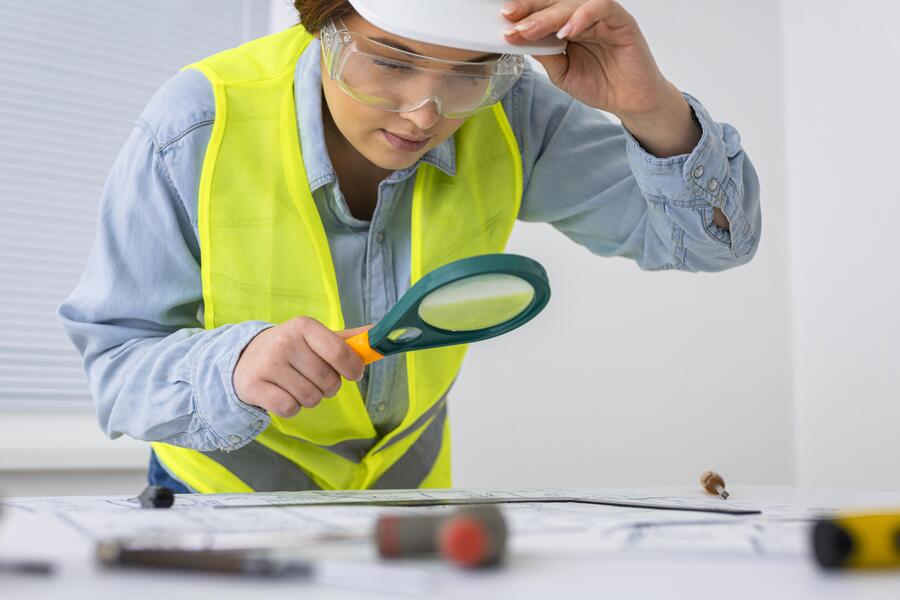
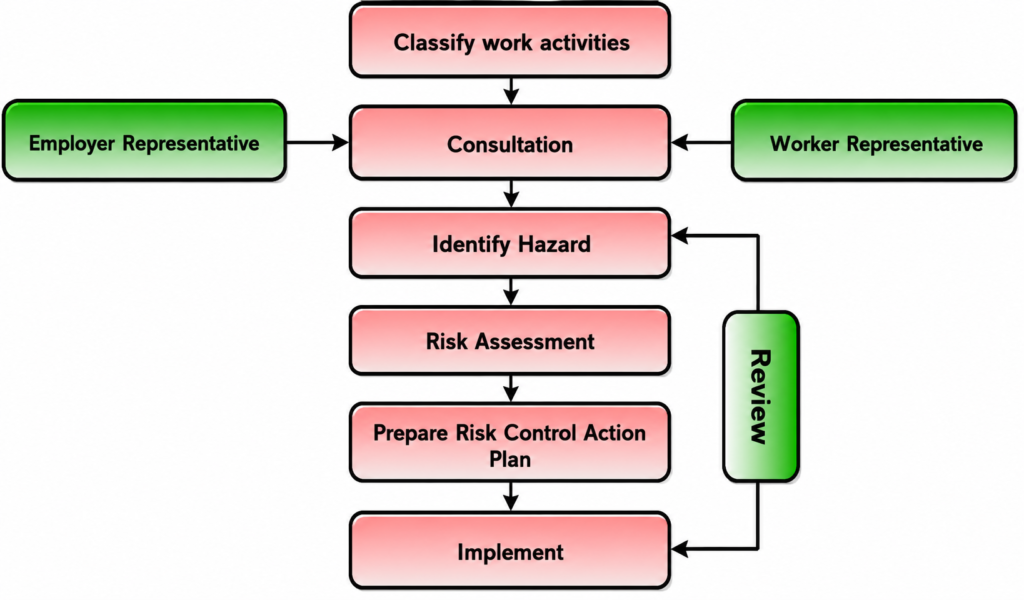
All workplaces, whether a factory, a warehouse, a construction site or an office, have potential hazards. Some hazards are obvious, like heavy machinery or an exposed electrical panel, but many are not until they surface in an incident and can have severe consequences. Hazard Identification and Risk Assessment (HIRA) is a structured and systematic way of identifying these potential hazards, assessing the level of risk they pose and implementing effective control measures to reduce the risk.
Workplace safety statistics
The International Labour Organisation estimates 2.9 million people die each year from work-related injuries and diseases around the world. From these deaths, about 2.6 million are due to occupational disease, and about 330,000 are due to acute accidents.
Approximately 374 million employees experience non-fatal workplace accidents.
Deaths related to the workplace surpass the yearly average fatalities from road accidents, war, violence and HIV/AIDS.
Reports indicate that 80%-90% of accidents are associated with unsafe behaviours or unrecognised hazards.
Why HIRA is Essential
HIRA helps organisations to assess and prevent potential hazards and risks before they happen, rather than after they occur. This systematic approach helps in implementing necessary controls, which can minimise the likelihood of incidents and improve workplace safety.
HIRA helps to:
- Identify hazards to prevent risk
- Take decisions on risk control
- Minimise injuries, downtime and operational losses.
- Ensure compliance with safety regulations,
- Strengthen workplace safety culture
When hazards are not clearly identified, organisations might miss those hazards or underestimate their severity, which results in poor safety strategies. As a result, the workers continue to face conditions that are hazardous and have the potential to cause injuries, damage to equipment or operational disruptions.
Risk Assessment
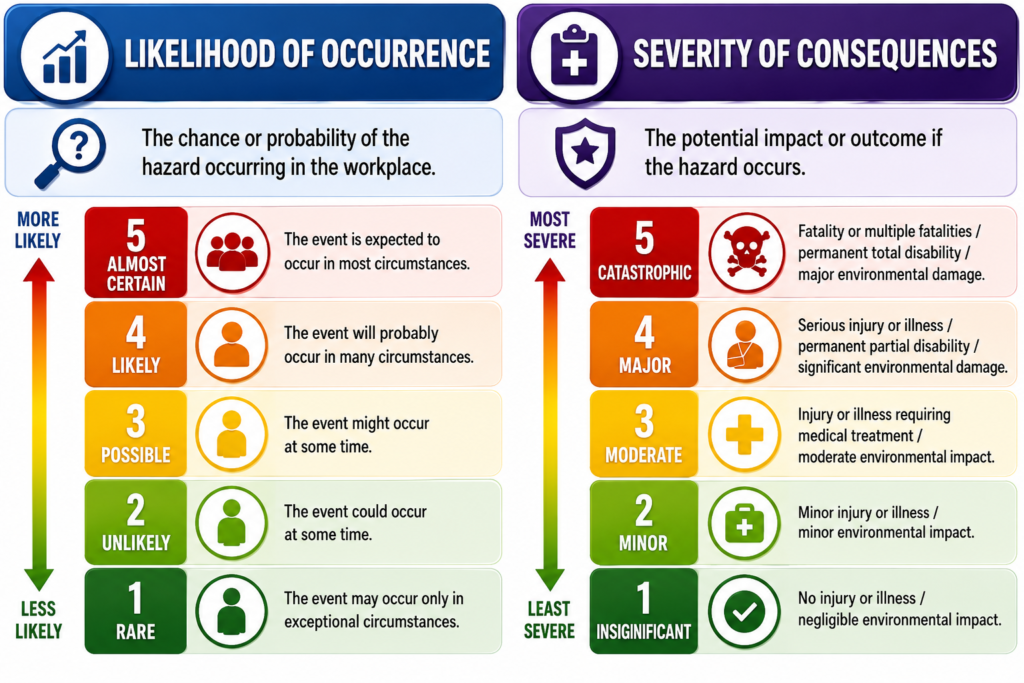
Risk assessment is the process after hazard identification, where each hazard identified is carefully assessed to identify the level of risk it poses. This assessment is mainly based on two key factors: the likelihood of occurrence and the severity of consequences. By analysing these aspects, organisations can systematically estimate risk levels for each hazard. This means that the most critical risks are addressed first, which helps to improve safety at the workplace and helps to prevent an incident.
Risk Control
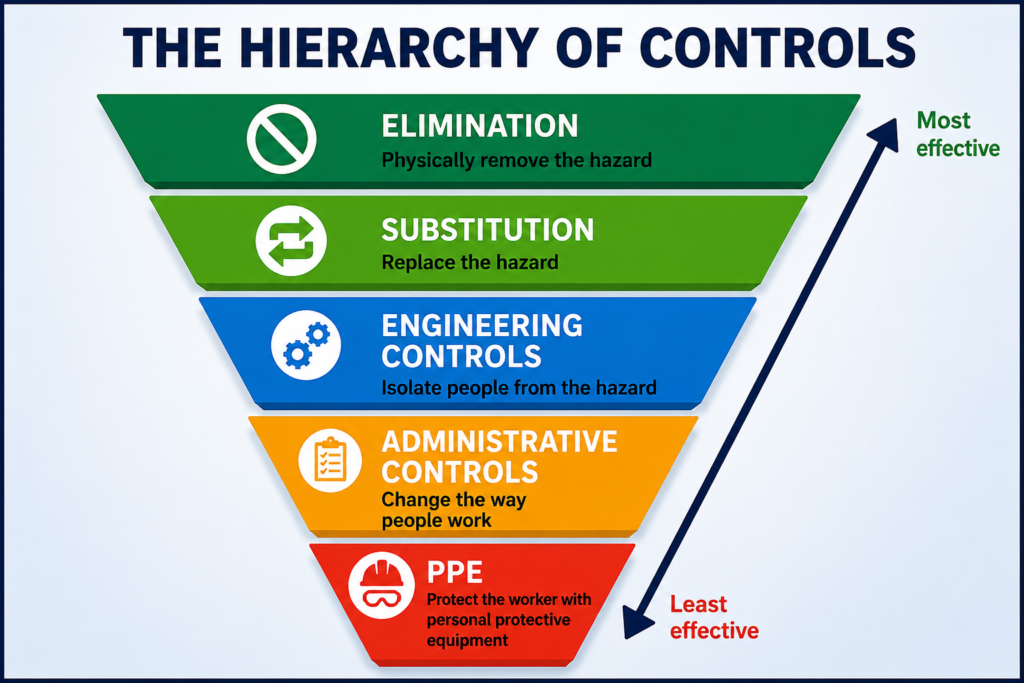
The Hierarchy of Controls is a structured approach that prioritises the most effective ways to reduce hazards and is used to control risks. This involves
- Elimination (removing the hazard altogether);
- Substitution (replacing the hazard with a safer one);
- Engineering controls (isolating people from the hazard);
- Administrative controls (changing work practices and procedures); and
- Personal protective equipment (PPE) (last line of defence).
The primary objective of this hierarchy is to remove risks at source, whenever possible, for a safer and more sustainable way of working.
Common Challenges in HIRA Implementation
When implementing HIRA, it is important to be aware of the common challenges, including,
- General or limited risk assessments
- The non-participation of manpower resources
- Inadequate understanding of the risk scoring process
- Ineffective control implementation
- Failure to regularly update assessments.
A common misunderstanding regarding HIRA is that it is a one-time activity carried out during the initial planning or documentation phase. Several organisations view it as a checklist task, believing that after identifying hazards and assessing risks, no additional measures are needed unless an incident takes place. In reality, HIRA is a continuous and dynamic process that needs to progress alongside changes in the workplace. With changes in equipment, processes, and working conditions, new hazards might arise. Regular evaluation and revision of risk assessments are crucial for maintaining safety and managing risks effectively. HIRA changes safety from a reactionary approach to a forward-thinking system. Organisations that prioritise HIRA not only protect their employees but also improve efficiency, lower expenses, and improve overall performance.
HIRA training with Evolve Safety Consultive
The goal is to provide employees with the confidence to identify and manage risks effectively.
Evolve Safety Consultive offers training with:
- Hazard identification techniques
- The use of risk assessment and scoring methods.
- Job Safety Analysis (JSA) training
- Real-time scenario-based learning
- Industry-specific customization