
Introduction
Fire incidents can occur in any workplace, whether it’s a factory, school, laboratory, office, retail store, or warehouse. In today’s world, although buildings are constructed with necessary safety precautions to detect and control fires, preventing a fire from occurring is the most proactive and efficient strategy. Even a small fire incident can result in injuries, work delays, financial losses and property damage.
Keeping a workplace safe is a shared responsibility. When employees are aware of the hazards that cause fire and understand how to respond during a fire emergency, serious incidents can be greatly reduced. That’s why fire safety training is essential in any workplace.
The following are five practical fire safety tips that every organisation can follow to maintain a safe work environment.
1. Identify Fire Hazards Before They Lead to an Incident
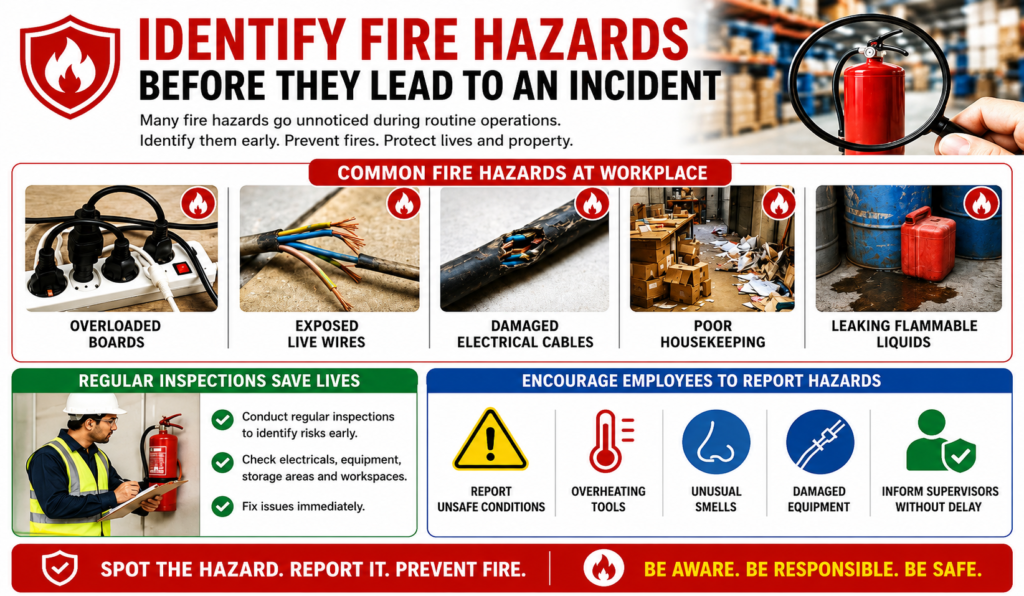
Several workplace hazards that cause fire may go unnoticed during routine operations. For example, overloaded boards, exposed live wires, Damaged electrical cables, poor housekeeping, and leaking flammable liquids are some of the most common causes.
Conduct regular inspections at the workplace to identify risks before they become emergencies. Encourage and ask employees to report unsafe conditions like overheating tools, unusual smells, or damaged equipment to immediate supervisors without delay.
2. Keep Emergency Exits Clear and Accessible
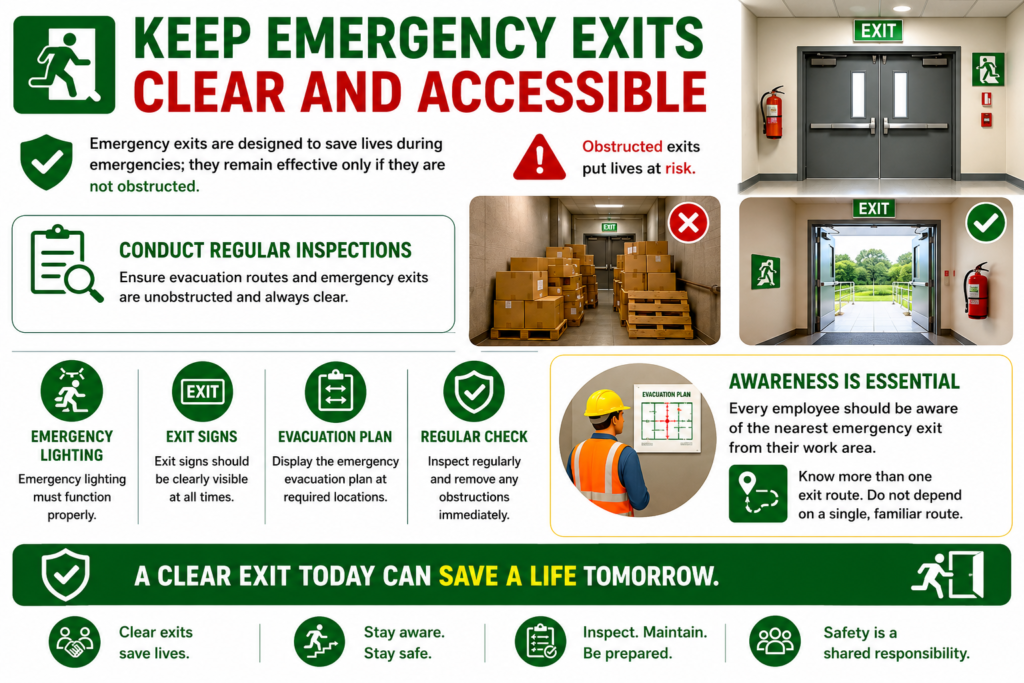
Emergency exits at workplaces are designed and provided to save lives during emergencies, but they remain effective only if they are not obstructed. Unfortunately, in many workplaces, it is common to find materials obstructing the emergency escape routes.
Conduct regular inspections to ensure evacuation routes and emergency exits are unobstructed and always clear. Emergency lighting must function properly, exit signs should be clearly visible, and the emergency evacuation plan should be displayed at required locations.
Moreover, every employee should be aware of the nearest emergency exit from their work area instead of depending on a standard familiar route.
3. Train Employees to Use Fire Extinguishers Correctly
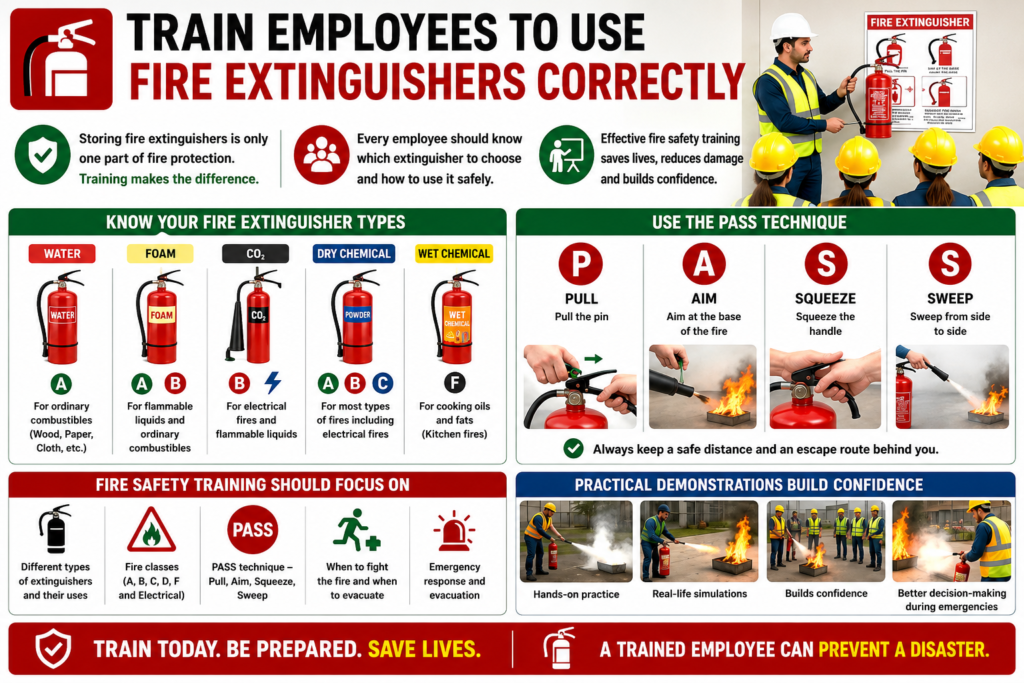
Storing fire extinguishers at the workplace is only a part of fire protection measures. In addition, every employee should know which type of extinguisher to choose and how to operate it safely.
Effective fire safety training needs to be conducted for employees, and the training should focus on different extinguisher types, fire classes, the PASS technique (Pull, Aim, Squeeze, Sweep), and emergency response.
In addition, practical demonstrations on fire extinguisher operation help improve decision-making and build confidence in employees during emergencies.
4. Maintain Good Housekeeping Every Day
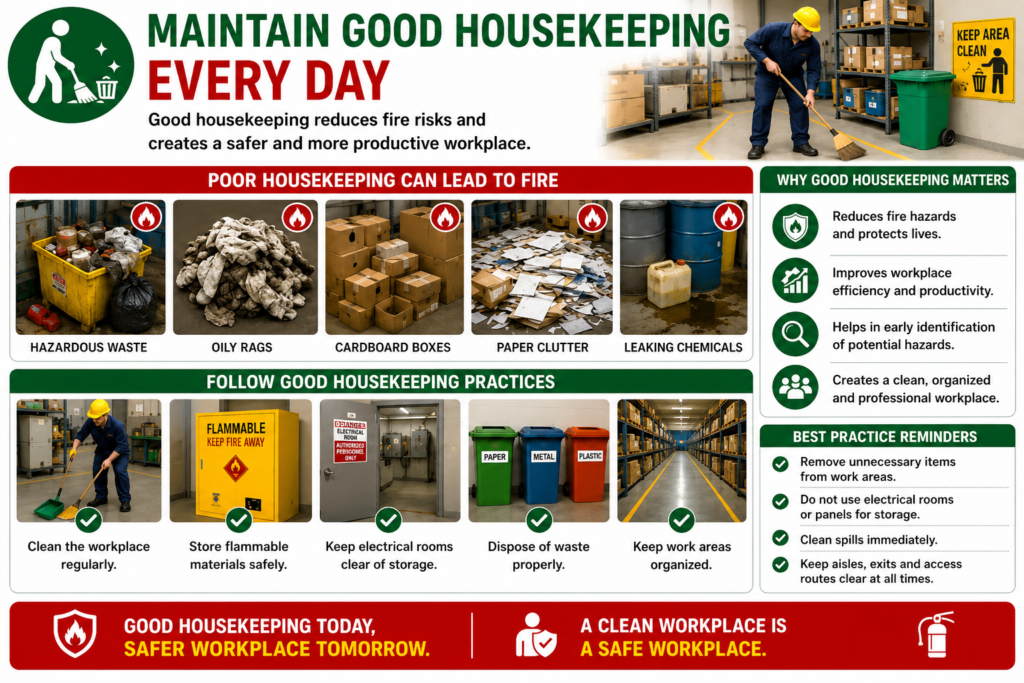
Good housekeeping is one of the important safe practices to reduce fire risks. Hazardous waste, oily rags, cardboard boxes, paper and leaking chemicals can quickly initiate a fire.
The workplace must be cleaned periodically, flammable materials should be securely stored, and electrical utility rooms should not be used as a storage area. Properly organised workspaces help to identify hazards easily before they become serious incidents.
Good housekeeping is one of the best practices to reduce fire risks and make the workplace more productive.
5. Build a Fire Safety Culture Through Regular Training
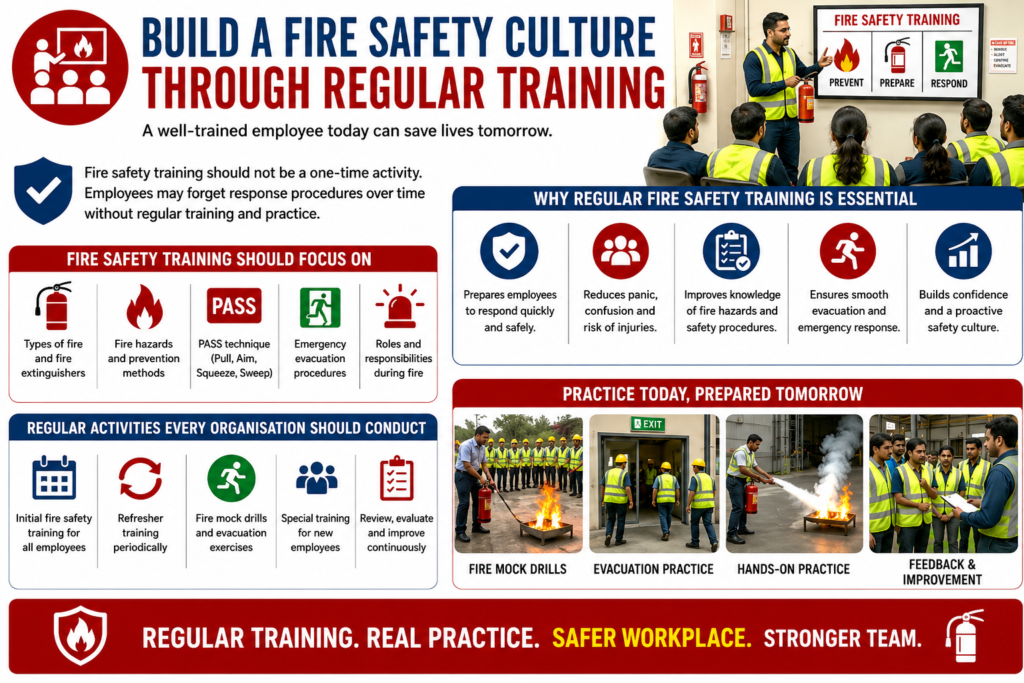
Fire safety training should not be considered as a one-time activity. Employees tend to forget fire response procedures over time if they are not provided with regular training and practice.
Every organisation should conduct fire safety training for all employees and periodically schedule fire mock drills and refresher training throughout the year. Such activities enable employees to stay familiar with emergency evacuation protocols and improve decision-making and confidence during emergencies.
Conclusion
A safer workplace can be achieved through awareness, preparation, and teamwork. Early identification of fire hazards, unobstructed emergency exits, good housekeeping, and regular fire safety training help to reduce fire risks and improve emergency preparedness and response.
Most importantly, organising practical fire safety training for employees enables every individual to identify hazards and respond efficiently during an emergency. Implementing such proactive measures for fire safety not only protects human lives but also makes the workplace safer and stable for everyone, ensuring business continuity and success.