

Scaffolding is an essential component of construction, maintenance and industrial operations. It offers access to high workspaces and support workers and materials at height. Yet, if not properly designed, erected or utilised, scaffolding can turn into one of the most hazardous elements on-site. Scaffolding-related accidents often result in severe injuries, delays in projects and financial losses. In many cases, this incident can be prevented through proper planning, inspection and training.
Statistics on Scaffolding Incidents
Statistics from the Bureau of Labour Statistics (BLS) show that around 4500 injuries and 60-80 fatalities occur each year as a result of scaffold-related incidents. These statistics highlight the severity of the risk involved, especially when safety practices are not strictly followed. Notably, about 72% of scaffold-related accidents are due to preventable factors such as improper assembly, overloading, and inadequate training for workers.
Causes of scaffolding accidents
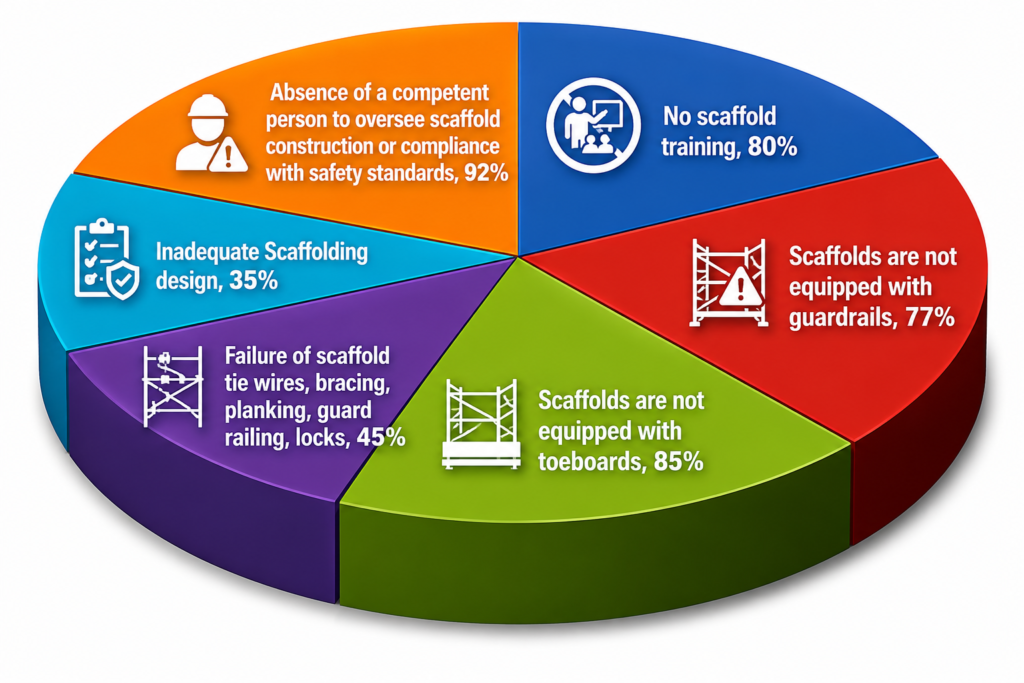
The primary cause of scaffolding accidents results from deficiencies in safety practices, supervision and design failures. The lack of crucial safety components, including toe boards (85%) and guardrails (77%), heightens the risk of accidents by leaving workers vulnerable to falls and falling objects. This indicates a lack of compliance with safety regulations and insufficient inspection procedures. Moreover, 80% of incidents are associated with inadequate employee training, highlighting that untrained staff are more likely to engage in unsafe practices.
Major Hazards in Scaffolding
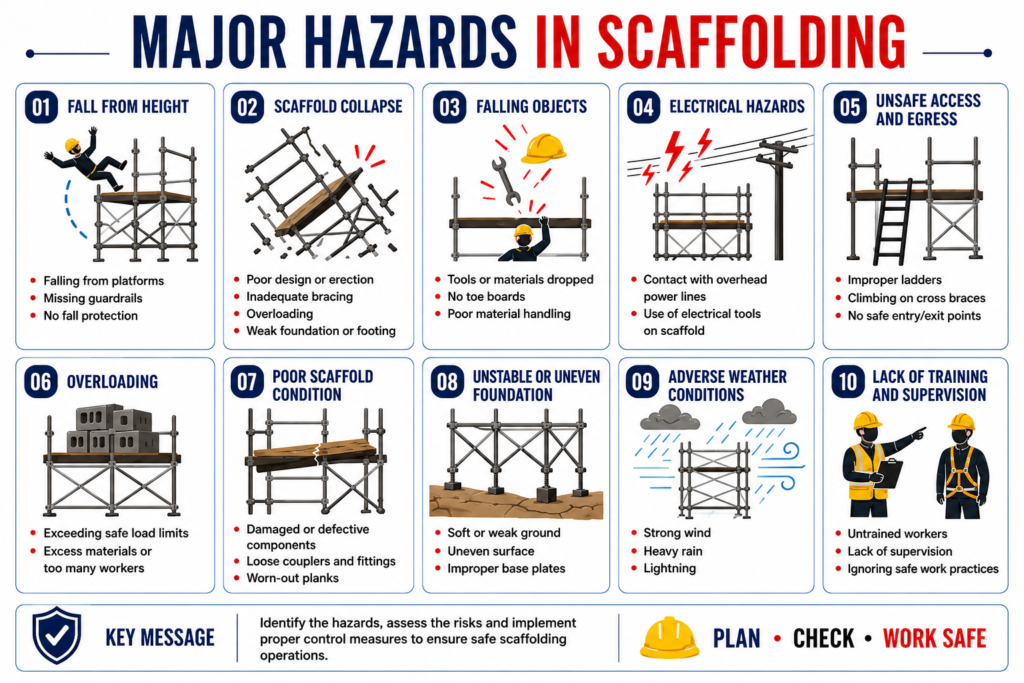
Fall from height – Workers may fall from scaffold platforms due to missing guardrails, improper use of fall protection systems, or unsafe work practices.
Scaffold collapse – Poor scaffold design, inadequate bracing, weak foundations, or overloading can cause the scaffold structure to collapse.
Falling objects – Tools, materials, or equipment may fall from scaffold platforms and strike workers below.
Electrical hazards – Contact with overhead power lines or electrical equipment near scaffolding can result in electric shock or electrocution.
Unsafe access and egress – Improper ladders, climbing on cross braces, or lack of designated access points can increase the risk of falls.
Overloading of scaffold platforms – Exceeding the scaffold load capacity with excessive materials or workers may lead to structural failure.
Poor scaffold condition – Damaged planks, loose fittings, defective components, or corrosion can compromise scaffold stability.
Unstable or uneven foundation – Soft ground, uneven surfaces, or improper base plates can reduce scaffold stability and lead to collapse.
Adverse weather conditions – Strong winds, rain, lightning, or slippery surfaces can create unsafe conditions during scaffold work.
Lack of training and supervision – Inadequately trained workers and insufficient supervision can result in unsafe scaffold erection and usage practices.
The Need for Scaffolding Safety Training
Scaffolding safety training is essential to help workers identify hazards, follow safe work practices, properly use scaffolds and PPE, and prevent incidents such as falls and scaffold collapse. It improves safety awareness, ensures regulatory compliance, reduces injuries and operational losses, and strengthens workplace safety culture.
Scaffolding Safety Training with Evolve Safety Consultive
At Evolve Safety Consultive, scaffolding training aims to bridge the gap between theory and practical on-site challenges, ensuring that each participant acquires hands-on confidence and practical expertise.
- Comprehensive training on scaffold components and safe usage
- Step-by-step guidance on erection and dismantling
- Scaffold inspection and hazard detection
- Load capacity awareness and stability concepts
- Practical demonstration and real-life scenario
Investing in scaffolding safety training involves more than just meeting regulations; it’s essential for safeguarding lives, minimising downtime, and fostering trust in every project.