

INTRODUCTION
Each workplace incident, whether it is a small near miss, equipment damage or a significant accident, holds a valuable lesson. Yet, several organisations often concentrate only on immediate issues and hastily return to operations without completely understanding what truly went wrong. This approach results in recurring incidents and missed opportunities for improvement. Incident investigation focuses not on identifying the individual who erred but on understanding the reason behind the incident and how to prevent similar occurrences moving forward. When carried out properly, investigations enable organisations to transition from a reactive approach to a proactive safety culture.
WHY IS INCIDENT INVESTIGATION IMPORTANT
Investigating incidents is essential for enhancing workplace safety and operational effectiveness. It helps organisations in going beyond surface-level fixes and concentrate on long-term solutions. Without adequate investigation, corrective measures frequently fall short as they focus only on apparent problems instead of underlying system failures.
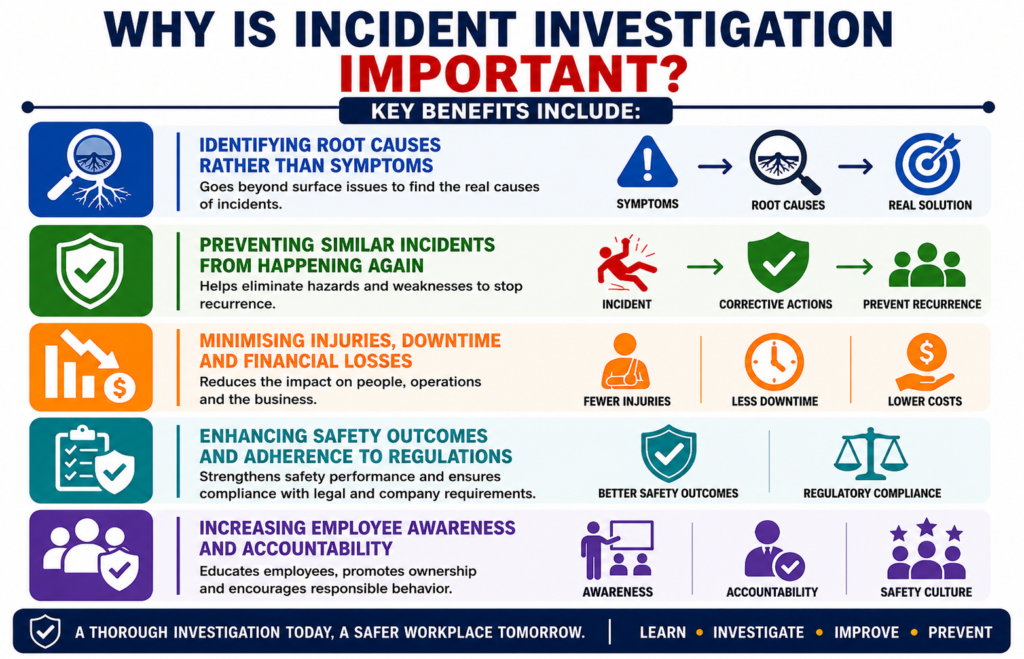
Key benefits include
- Identifying root causes rather than symptoms
- Preventing similar incidents from happening again
- Minimising injuries, downtime and financial losses
- Enhancing safety outcomes and adherence to regulations
- Increasing employee awareness and accountability
STEPS IN THE INCIDENT INVESTIGATION PROCESS
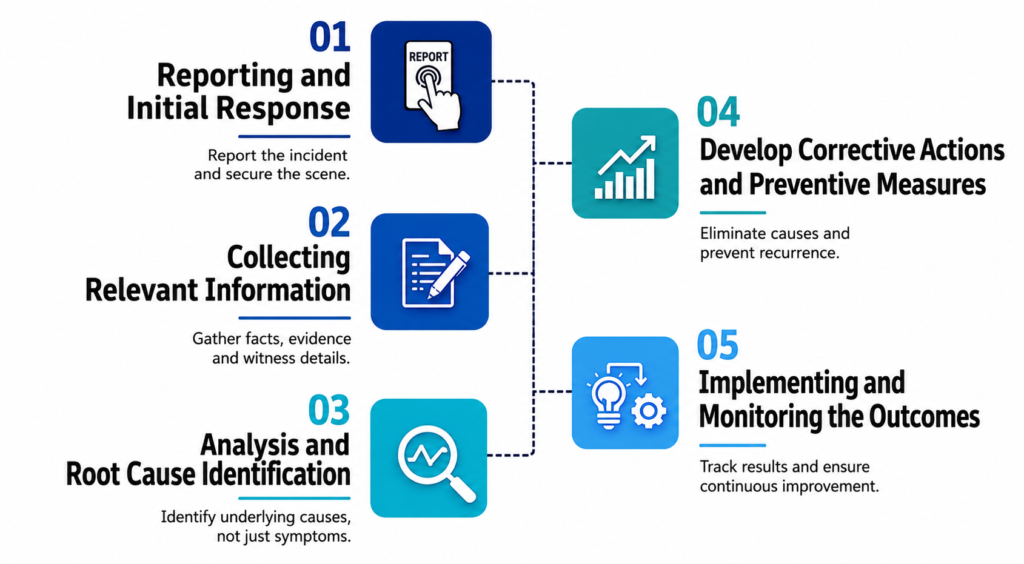
Step 1: Reporting and Initial Response
Immediately report the incident and take prompt action to secure the area, provide medical assistance, and prevent further harm or damage.
Step 2: Collecting Relevant Information
Gather all necessary information such as witness statements, photographs, records, evidence, and details of the incident scene.
Step 3: Analysis and Root Cause Identification
Analyse the collected information to determine the immediate causes and identify the underlying root causes of the incident.
Step 4: Develop Corrective Actions and Preventive Measures
Identify and establish actions to eliminate root causes and implement measures to prevent recurrence.
Step 5: Implementing and Monitoring the Outcomes
Implement the recommended actions and monitor their effectiveness to ensure continuous improvement and sustained safety performance.
CHALLENGES IN WORKPLACE INCIDENT INVESTIGATIONS
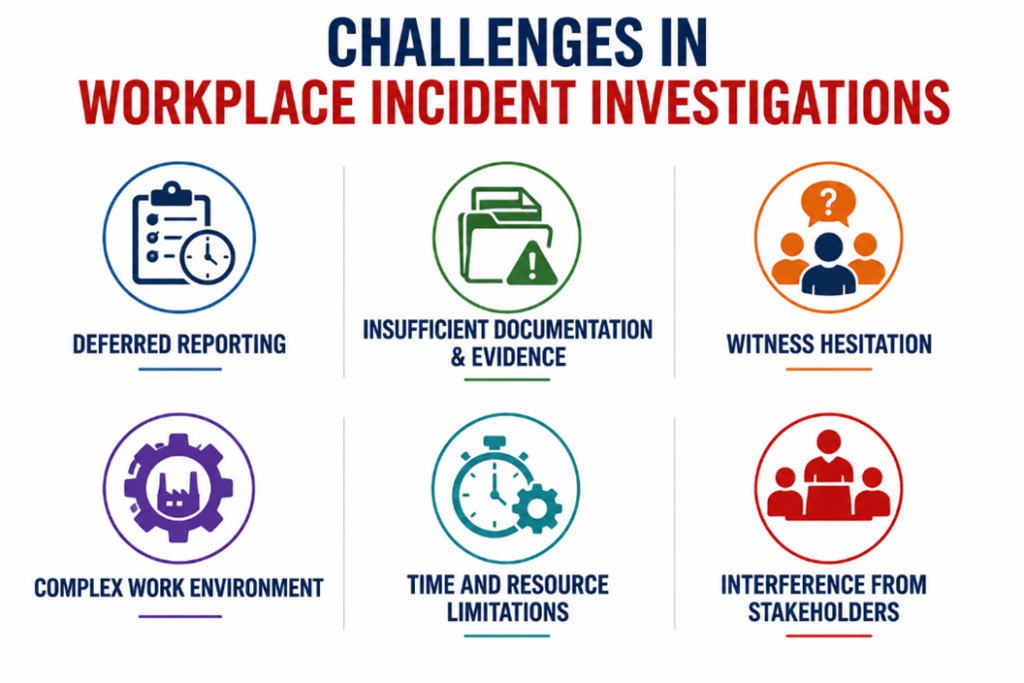
Investigations into workplace accidents frequently encounter various challenges that can impact the procedure and the trustworthiness of the results.
Deferred Reporting: Inadequate prompt reporting results in lost evidence, ambiguous event order, and challenges in determining root causes.
Insufficient Documentation & Evidence: Lack of thorough documentation and poor evidence retention lead to incomplete investigative results and overlooked contributing factors.
Witness Hesitation: Anxiety and doubt diminish witness collaboration, restricting precise information and impacting investigation effectiveness.
Complex Work Environment: Sophisticated systems and procedures demand expert knowledge, complicating the identification of root causes.
Time and Resource Limitations: Restricted time, workforce, and funding result in shallow analysis and inadequate corrective measures.
Interference from Stakeholders: Pressure from participating individuals leads to skewed outcomes, compromising the objectivity and precision of inquiries.
Every one of these challenges can undermine the investigation and diminish its efficacy if not adequately managed. These challenges emphasise the necessity for organised, clear, and adequately funded investigative frameworks.
WHY INCIDENT INVESTIGATION TRAINING IS NECESSARY
Incident investigation training is essential because it helps employees and management identify the actual causes of incidents rather than focusing only on visible problems or assigning blame. It provides the skills needed to collect evidence, analyse incidents systematically, and identify root causes accurately. Training also improves reporting quality, encourages employee participation, ensures compliance with safety requirements, and helps prevent similar incidents from happening again. Therefore, training for incident investigation turns incidents into chances for learning, helping organisations avert future accidents and enhance workplace safety consistently.
INCIDENT INVESTIGATION TRAINING WITH EVOLVE SAFETY CONSULTIVE
At Evolve Safety Consultive, we emphasise hands-on and organised incident investigation training that aids organisations in recognising causes and avoiding recurrence
Key offerings include:
- Incident reporting and investigation procedures
- Root cause analysis techniques
- Near-miss investigation concepts
- Evidence collection and witness interviewing methods
- Corrective and preventive action planning
- Real-life case studies and scenario-based exercises
We aim to help organisations in developing the ability to detect risks early and prevent future incidents.
Partner with Evolve Safety Consultive to:
✔ Improve investigation capability
✔ Prevent repeat incidents
✔ Build a proactive safety culture