
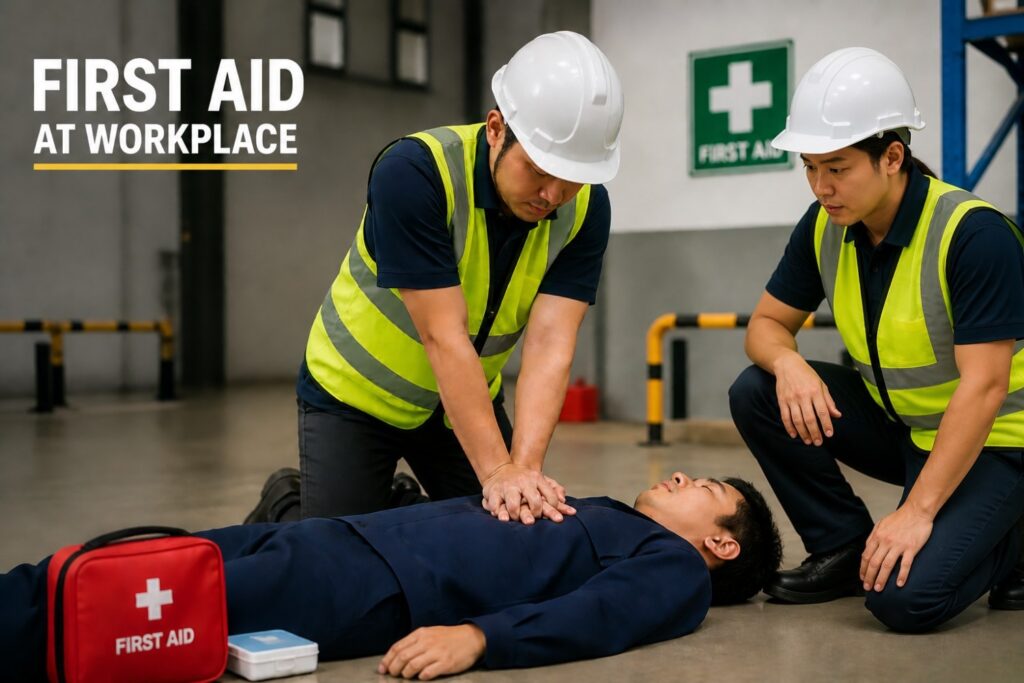
Workplace emergencies are often unpredictable and can occur across any environment such as from office settings to high-risk industrial operations. A significant number of injuries occur annually across industries, reflecting continuous exposure to workplace hazards. If these injuries are not addressed properly in critical time, then it would lead to severe consequences. A prompt first aid intervention can reduce injury severity and significantly improve recovery outcomes. First aid is the prompt and initial care provided to a person suffering from any injury or ill health until professional medical assistance is made available. A quick and appropriate response can prevent complications and reduce the risk of fatalities.
The primary objective of first aid is to preserve & prevent the life condition from worsening, and support recovery. Establishing a strong first aid preparedness within the organization improves emergency response effectiveness and contributes to a structured, resilient, and safety-oriented workspace
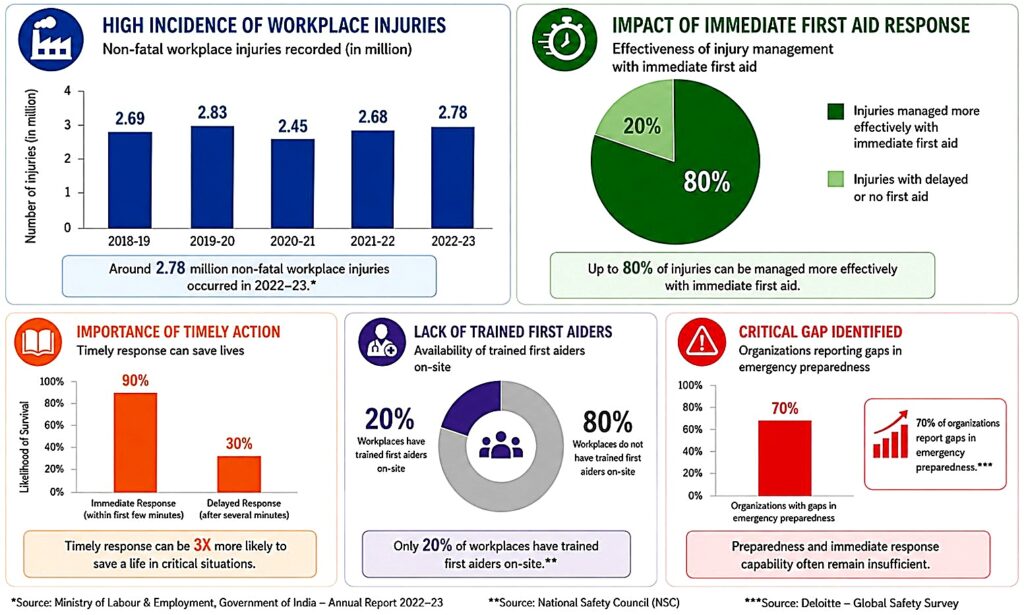
Common Workplace Emergencies
Recognizing the emergency categories is important to respond promptly to the victims during critical conditions.
Some of the workplace emergencies:
Injury-Related Emergencies
- Cuts, lacerations, and bleeding
- Burns (thermal, electrical, chemical)
- Fractures and sprains
- Head injuries
Medical Emergencies
- Cardiac arrest
- Breathing difficulties
- Seizures
- Fainting or unconsciousness
Environment-Related Emergencies
- Heat stress or heat stroke
- Chemical exposure
- Electric shock
- Falls from height
These situations require immediate response, not delayed action.
Why First Aid is Critically Important
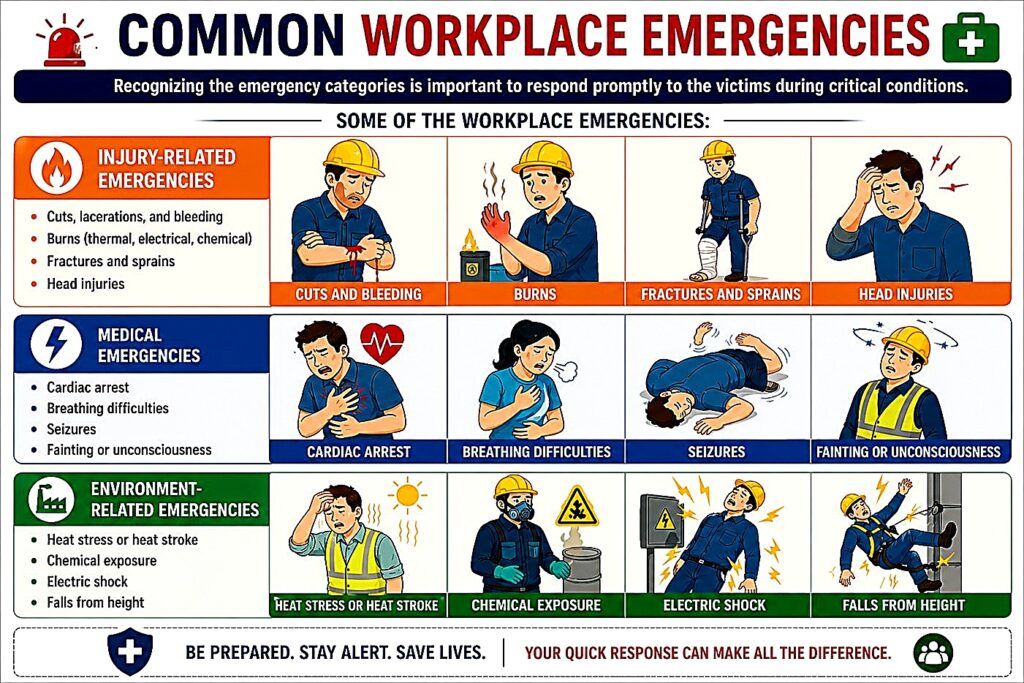
Time-Critical Response: The first few minutes during an emergency are decisive and can determine the overall outcome of the incident.
Stabilizes the Casualty: Immediate first aid helps to maintain vital functions and stabilizes the injured or ill person until medical help arrives.
Prevents Worse Condition: Early intervention stops the situation from worsening and reduces the risk of complications.
Reduces Recovery Time: Prompt care supports faster healing and minimizes long-term impact.
Improves Survival Chances: In severe cases, timely first aid will improve the survival chances of the victims
Bleeding Control: Timely control of bleeding helps prevent shock and excessive blood loss.
CPR Intervention: Performing Cardiopulmonary Resuscitation (CPR) sustains life during cardiac arrest.
Burn Management: Immediate treatment reduces tissue damage and long-term complications.
Key Insight: The recovery time often depends on how quickly and effectively first aid is provided.
The Need for First Aid Training
Despite knowing the importance of first aid, many workplaces has significant gaps in emergency preparedness.
Lack of Trained First Aiders: Many organizations do not have adequately trained personnel available to respond during emergencies.
Uncertainty in Emergency Situations: Employees are often not aware of the correct actions to take, leading to hesitation or inaction.
Improper Use of First Aid Resources: First aid kits are available, but are not always used correctly due to lack of knowledge.
Delayed Response Due to Panic: Confusion and panic during emergencies can result in critical delays in providing care.
Absence of Structured Response Plans: Many workplaces lack clearly defined emergency response procedures and protocols.
Effective emergency response depends on trained individuals who can act confidently, correctly, and without delay.
Benefits of First Aid Training in the Workplace
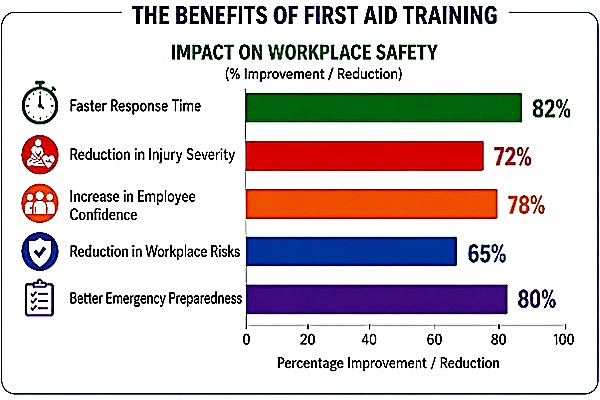
Trained employees respond immediately without waiting for external medical assistance.
• Early intervention reduces severity of injuries and prevent complications
• Employees feel safer knowing trained support is available on-site.
• Improves workplace safety culture by promoting and giving awareness.
• Supports adherence to legal requirements and organizational policies.
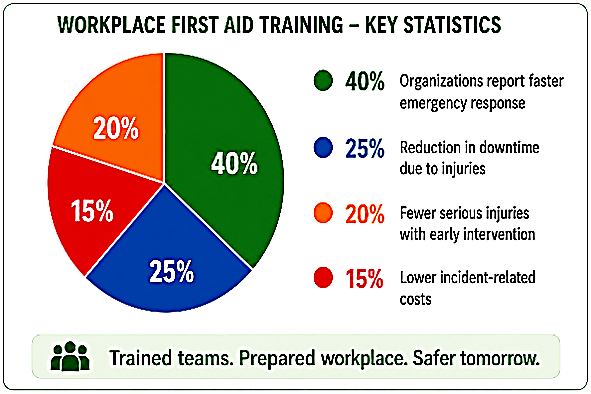
Building a Prepared Workplace
Organizations that invest in first aid training build a proactive and safety-driven work environment. A prepared workplace is one where employees are equipped with the knowledge and confidence to respond effectively during emergencies.
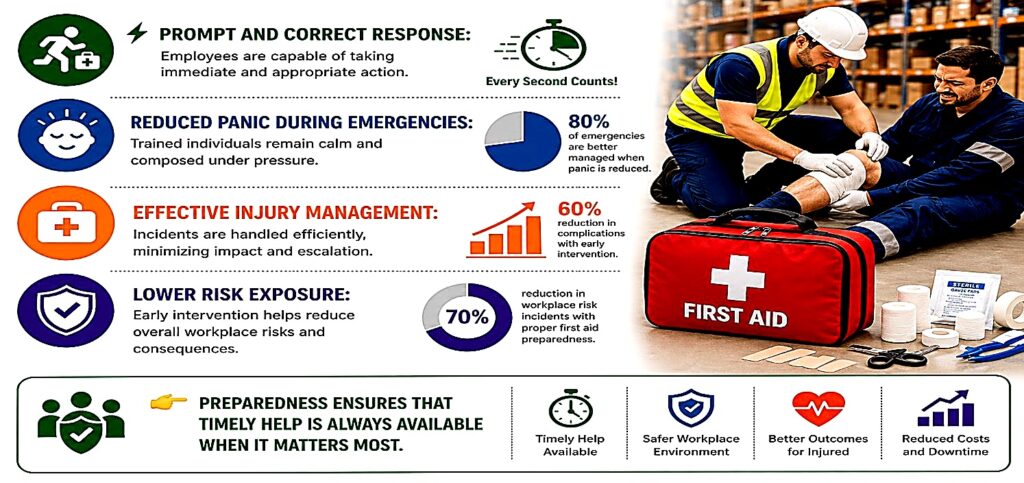
Conclusion
Emergencies may not always preventable, but their consequences can be controlled significantly through timely action. The first few minutes following an incident are golden hours and often determine the severity of the outcome.
First aid acts as the vital link between the occurrence of an incident and the arrival of professional medical support.
First Aid Training with Evolve Safety Consultive
At Evolve Safety Consultive, first aid training is delivered with a strong focus on real-world application and effective emergency response.
Key offerings include:
- Roles & Responsibilities of First Aider
- Scene Safety & Risk Assessment
- Recovery Position
- Use of AED
- Hands-on CPR Practice
- Injury Management
- Medical Emergencies
- First Aid Box Contents & Usage & more
The goal is to build a workforce that is confident, capable, and ready to act when required.
📞 Take the Next Step
Strengthening workplace preparedness is a key step towards effective response during emergencies.
Partner with Evolve Safety Consultive to:
✔ Train employees in essential first aid skills
✔ Strengthen emergency response capability
✔ Build a safer and more confident workforce
📩 Because timely action doesn’t just save time—it saves lives.