
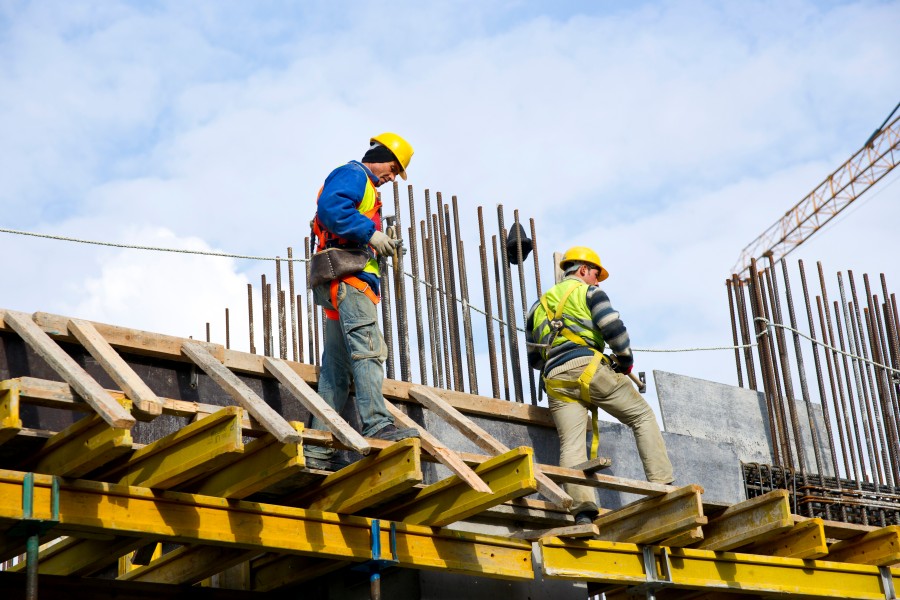
Working at height is an any type of work where there are chances that an individual may fall, leading to accidents and potential injury. Working at height is one of the most hazardous tasks across all industries such as construction, manufacturing, warehousing, etc. It may be working on scaffoldings, ladders, roofs or high platforms, the potential risks are high and cannot be estimated easily. A fall can lead to serious injuries or even loss of lives. In many regions, across the world, fall from height (FFH) is the leading contributor of higher fatality and injury rate at the workplace.
Key Statistics on Work at Height Incidents
Falls from height are the major cause of deaths in the Indian construction industry (see Fig 1). The statistics show that unprotected falls contributed for about 39% of the fatal construction accidents. A closer analysis of the distribution of the accidents shows that most of the accidents were related to falls on the roofs (33.3%) and ladders (23.8%). This implies that activities that involve elevated, unguarded working surface and temporary access systems are particularly much more hazardous. The significant contribution of scaffoldings and stagging (14.8%) further emphasizes the risks associated with poor design or insufficient maintenance of temporary structures. Moreover, the contributions from tower/poles (2%) and floors/ground surfaces (4.4%) signifies that elevated work zones, rather than ground-level operations, dominate fatality statistics.
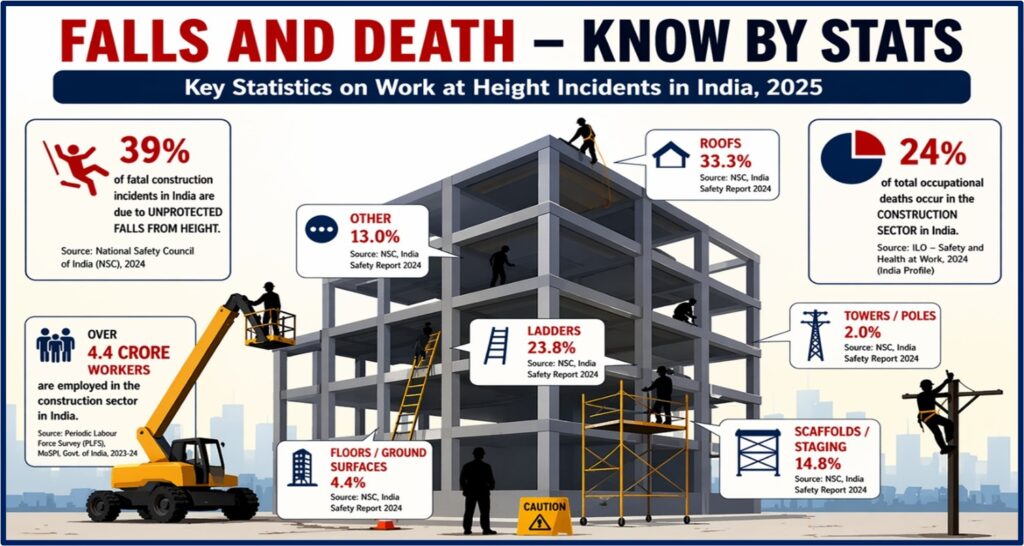
These statistics make it clear that the issue is not only due to risk exposure but also a critical gap in the effective implementation of safety measures. Inspite of the regulations and protective systems, the lack of proper training, supervisions and compliance are significant factors contributing to accidents, which highlights the necessity to implement stronger safety practices.
Common Causes of Work at Height Accidents
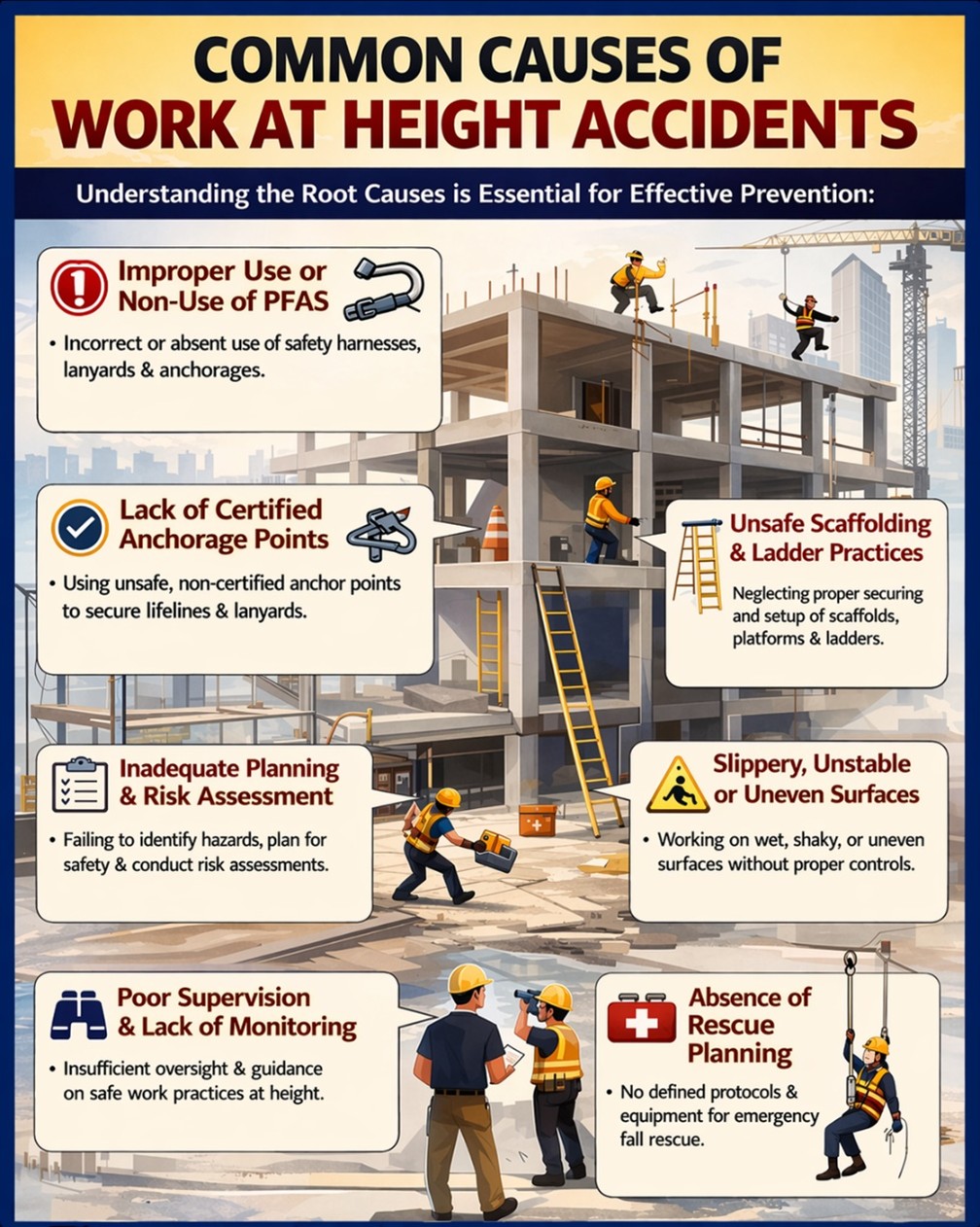
Work at height accidents usually occurs as a result of a combination of preventable factors, hence it is necessary to understand their root causes of such accidents in order to prevent them. The most typical problems include the inappropriate use or non-use of personal fall arrest systems (PFAS), the lack of certified and safe anchorage points and unsafe work with scaffolding and ladders (see Fig 2).
In many cases, poor planning and risk assessment prior to commencement of the wok and the hazardous working conditions like slipping, unstable or uneven surfaces also exist. Ineffective supervision and lack of continuous monitoring also increase the risk of accidents and moreover, the lack of an adequate rescue plan may even worsen outcomes in case of an emergency. Notably, the primary issue is not only the absence of safety equipment, but also its improper use and lack of awareness, thus highlighting the urgent necessity of efficient safety trainings.
Preventive Measures for Work at Height Safety
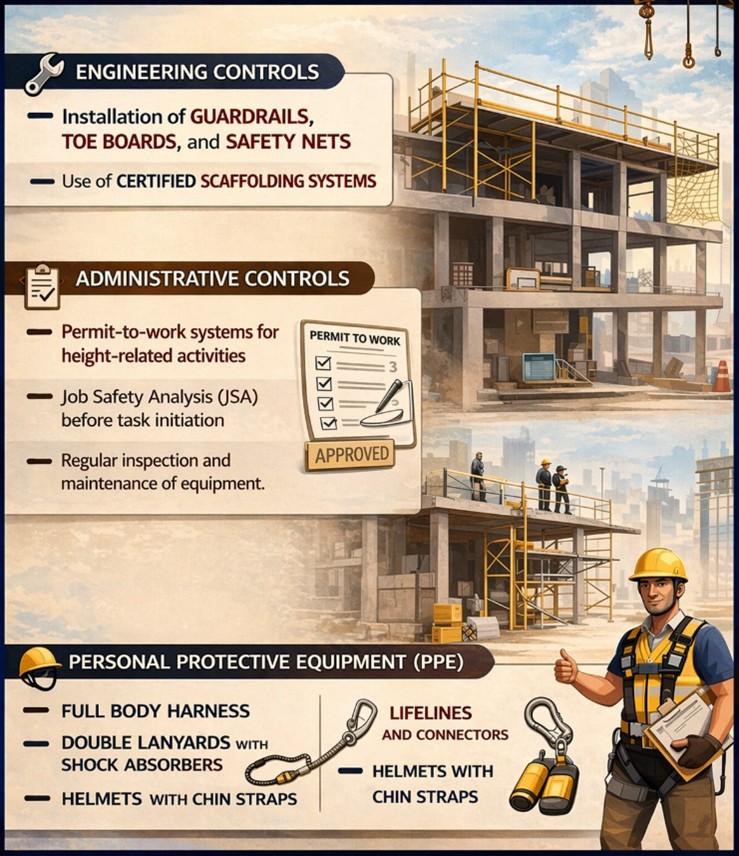
To prevent work-at-height accidents effectively, an integrated approach combining engineering, administrative and personal safety measures are needed (see Fig 3).
Engineering controls involve installation of guardrails, toe boards, safety nets, certified scaffolding systems and well-designed anchorage points that are able to support the fall forces.
Administrative controls include the use of permit-to-work systems, conducting job safety analysis (JSA) before a task is performed, periodic inspection of equipment and having well-defined safety procedures with adequate supervision.
Moreover, wearing of proper personal protective equipment (PPE) like full-body harnesses, double lanyards with shock absorbers and chain straps-equipped helmets are also necessary.
Importance of Work at Height Safety Training
Although engineering controls and protective equipment are essential, their effectiveness largely depends on the skill of the workforce utilizing them. This is where safety training plays a pivotal role. Many studies have indicated that inadequate safety training significantly contributed to the higher rates of accidents
Training serves as an essential bridge between the safety systems and their proper implementation in the field. Because of lacking sufficient knowledge and practical understanding, employees might violate or neglect safety procedures /equipment, making even the existing proper safety systems ineffective.
An effective training program provides employees with the skills to:
- Recognize work at height hazards and risks.
- Inspect, select and properly utilize fall protection equipment.
- Understand the fall distance and clearance
- Follow safe work practices
This significantly lowers the chances of failures related to work at height risks. Moreover, trained employees acquire the ability to identify possible risks before carrying out tasks.
Work at Height Safety training with Evolve Safety Consultive
At Evolve Safety Consultive, Work at Height training covers key elements, such as the Hazards & risks, hierarchy of controls, safe work practices, active & passive fall protection system , and the use of PPE. Learners acquire comprehensive knowledge about the role and responsibilities of both employees and employers in ensuring a safe workplace, which ultimately aids in accident prevention.
Key offering includes;
- How to properly use full body harness
- How to select a safe anchorage location
- Clear understanding of fall distance and clearance
- How to properly use ladders and scaffoldings
- How to recognize unsafe situations and risks when working at heights
- Importance of stable working surfaces
- Dos and Don’ts while working at height
- Awareness of emergency response and rescue
The objective of the training is to guarantee that employees are not only aware but also confident in performing tasks safely at height.
Take the Next Step !!!
Partner with Evolve Safety Consultive to:
✔ Enhance safety performance
✔ Reduce workplace risks
✔ Build a competent workforce
📩 Contact us today to implement effective work at height safety training in your organization.