
Workplace safety is not just about procedures rules, or equipment, it is deeply influenced by how people behave every day on their job. Many incidents occur not because procedures don’t exist, but because they are not consistently followed. This is where behaviour-focused approach becomes critical.
In fact, studies across industries suggest that 80% to 90% of workplace incidents are linked to unsafe behaviours, and nearly 70% to 80% of industrial accidents involve human error. They are not small numbers. These replicates the biggest risk in any workplace is not always the hazard itself, it is how people react to it—especially when under pressure, in a hurry, or doing routine tasks. This is where Behaviour-Based Safety (BBS) starts to make sense. It shifts the focus from just “what is unsafe” to “why people behave the way they do.
At the end of the day, systems and procedures are important but they are only as effective as the people who follow them. If behaviour is understood and improved, instead of safety stops being reactive and becomes proactive. There comes the real lasting change.
Why Human Behaviour is Critical in Workplace Safety
Though advanced safety systems and procedures are in place, unsafe actions can still lead to incidents. Human behaviour plays a critical role in:
- Decision-making under pressure
- Risk perception and judgment
- Following or bypassing safety procedures
- Communication between team members
By giving spotlight on behaviour, organizations can address the root causes of unsafe actions before they lead to incidents.
Key Elements of a Behaviour-Based Safety
Behaviour Based Safety is built upon by the following key foundational elements:
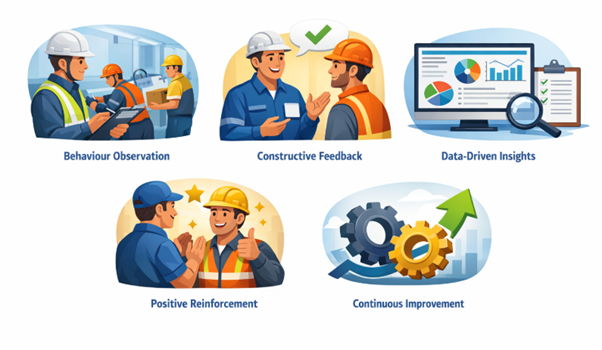
1. Behaviour Observation
Safe and risk behaviours during routine work activities are identified.
2. Constructive Feedback
Real-time Constructive feedback helps in reinforcing safe practices and correct unsafe actions without blame.
3. Data-Driven Insights
Evaluating the observed data to identify trends, high-risk areas, and improvement opportunities.
4. Positive Reinforcement
Safe behaviours are identified and motivated in order to build consistency across teams.
5. Continuous Improvement
Achieve Continuous Improvement through feedback, observations, and workplace changes.
What BBS Teaches Us About Everyday Safety Behaviour
Workplace safety is shaped not just by systems and procedures, but by the everyday actions and decisions people make. Behaviour-Based Safety (BBS) helps in understanding these actions and improving them to create safer work environments.
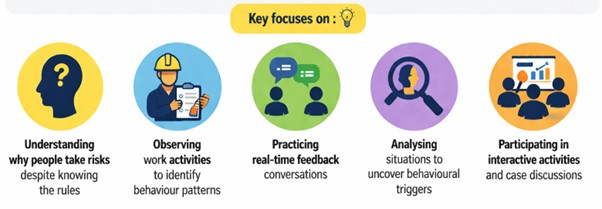
Key Focus Areas:
- Understanding why people take risks despite knowing the rules
- Observing work activities to identify behaviour patterns
- Practicing real-time feedback conversations
- Analysing situations to uncover behavioural triggers
- Participating in interactive activities and case discussions
Why Your Business Needs BBS Today
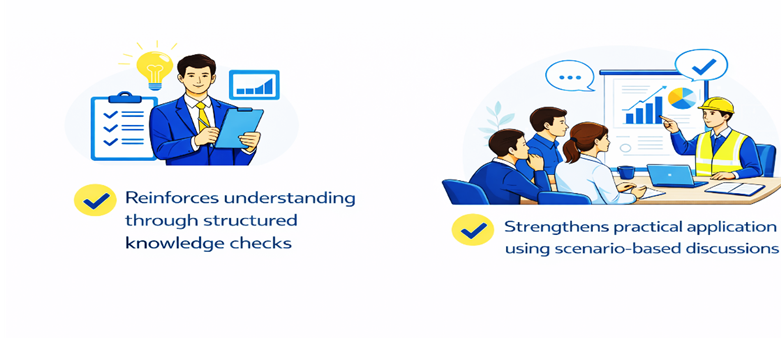
In today’s dynamic work environment, ensuring that safety concepts are not only understood but effectively applied is critical. A structured training approach to evaluate the understanding helps organizations confirm that individuals are prepared to translate knowledge into safe actions on the job.
Invest in BBS Training with Evolve Safety Consultive
Organizations that adopt Behaviour-Based Safety see measurable improvements in safety performance and workforce engagement.
✔ Reduction in unsafe acts and near misses
✔ Improved communication and teamwork
✔ Stronger safety ownership among employees
✔ Enhanced leadership involvement in safety
✔ Long-term cultural shift toward prevention
After completing this training, individuals are equipped with practical abilities that directly impact workplace safety.
They will be able to:
- Observe work practices and identify behavioural risks
- Understand the underlying reasons behind unsafe actions
- Communicate feedback in a constructive and respectful way
- Take proactive steps to prevent incidents
- Influence team members through positive reinforcement
- Support long-term behavioural change within the organization
Behaviour-Based Safety Training is not just a program—it is a mindset that transforms how safety is perceived and practiced.