
Fire Safety: More Than Just a Legal Requirement
In most organizations, fire safety is considered as a checklist; a task is done only with the aim of meeting the regulatory requirements or pass audits. Fire extinguishers are placed, alarm systems are installed and safety policies are documented, giving an appearance of full compliance on paper. However, fire safety is much more than a legal obligation. One fire accident can quickly interrupt operations, threaten lives and cause irreparable losses to infrastructure and organisational reputation. It may take years to recover such losses and in other cases they do not recover at all. Thus, the reality is clear; fire safety is not only a matter of compliance but about preparedness, protection and a high degree of responsibility.
Fire Safety Statistics You Should Not Ignore
The importance of fire safety can be better evident explained by the real-world data. The National Crime Records Bureau (NCRB) reported that in India, around 3.16 lakhs cases of fire accidents were reported between the year 2001 and 2014. The highest cases of accident were occurred in the year 2011, where 26,343 incidents were reported (Figure 1). Beyond the loss of life, fire incidents also place a substantial economic burden on the country, with estimated losses reaching around ₹1 lakh crore annually, accounting for nearly 0.8–1.0% of the country’s GDP. (Figure 2). This figure is derived from insured losses and extrapolated considering India’s relatively low insurance penetration of about 30%. Recent report revealed that several high-impact fire events have occurred in industrial facilities, warehouses, hospitals, and high-rise residential buildings in between 2024-2026.
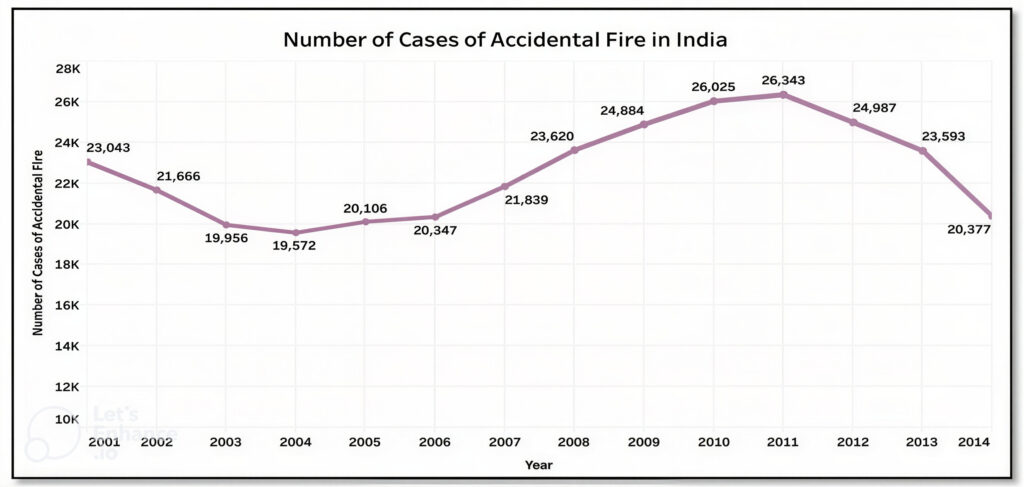

Each year, thousands of fire incidents are reported across India, with a significant number occurring in workplaces. Many of these fire result from electrical issues like short circuits an overloaded system, human errors including negligence and lack of awareness and poor maintenance practices. Even more concerning is the fact that many employees lack sufficient training to respond during emergencies, resulting in confusion and anxiety rather than quick and effective decision-making when a fire breaks out. These statistics clearly highlight a critical gap in most workplaces, specifically the absence of awareness and hands-on training.
Major Fire accidents that shook India
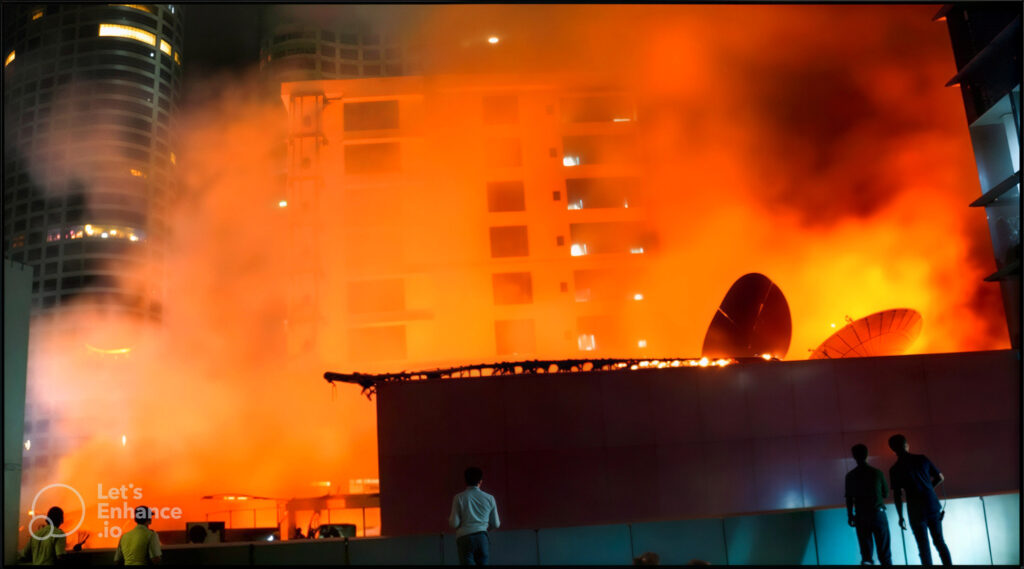
Kamala mills fire (Figure 3):
On December 29, 2017, a fire erupted at a rooftop bar, allegedly sparked by sparks of hookah, and this flammable materials like curtains and decor items, resulting in a fire triggered by an electrical short circuit. The accident has resulted in the death of 14 peoples and more than 55 peoples were injured.
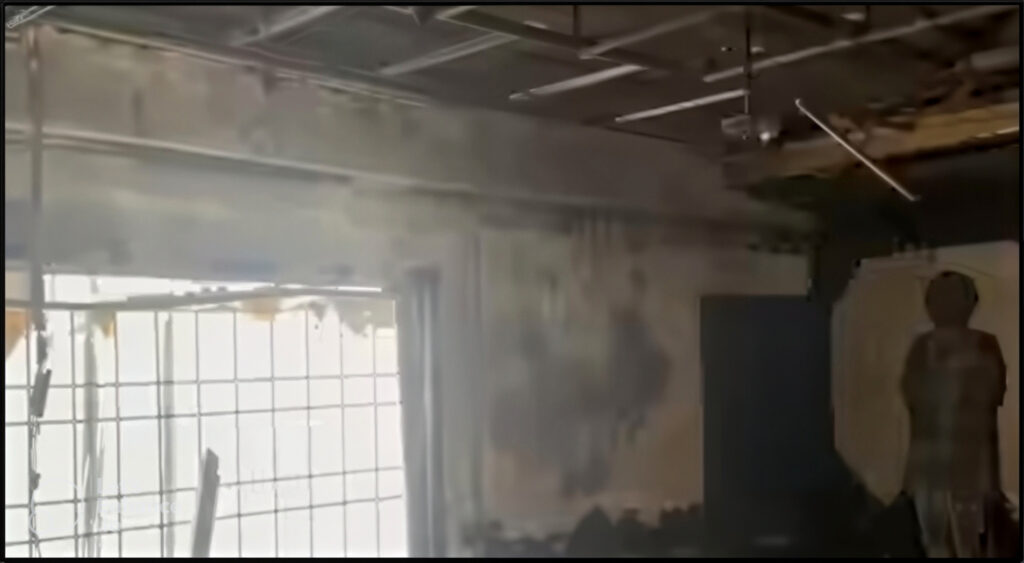
Rajkot Apartment fire (Figure 4):
On March 14, 2025 a major fire broke out on the sixth floor of the Atlantis apartment complex in Rajkot, Gujarat. Three peoples were reported deceased and one was injured in the accident. Initial observation reveals that a short circuit in the lobby area, occurring amidst renovation work, may have caused the fire.
Fire Breaks Out at SKICC (Figure 5):
On 21 March 2025 in Srinagar, Jammu & Kashmir, a fire broke out on Friday evening at the Sher-i-Kashmir International Conference Centre (SKICC), engulfing a CRPF guard room within the complex. The incident was signalled at approximately 7:07 PM, which led to an immediate reaction by several units, comprising of personnel of Fire and Emergency Services (F&ES) teams of Brein, Gowkadal, Nehru Park, and F&ES Headquarters in Srinagar. The exact cause of the fire was reported as an electrical short circuit.
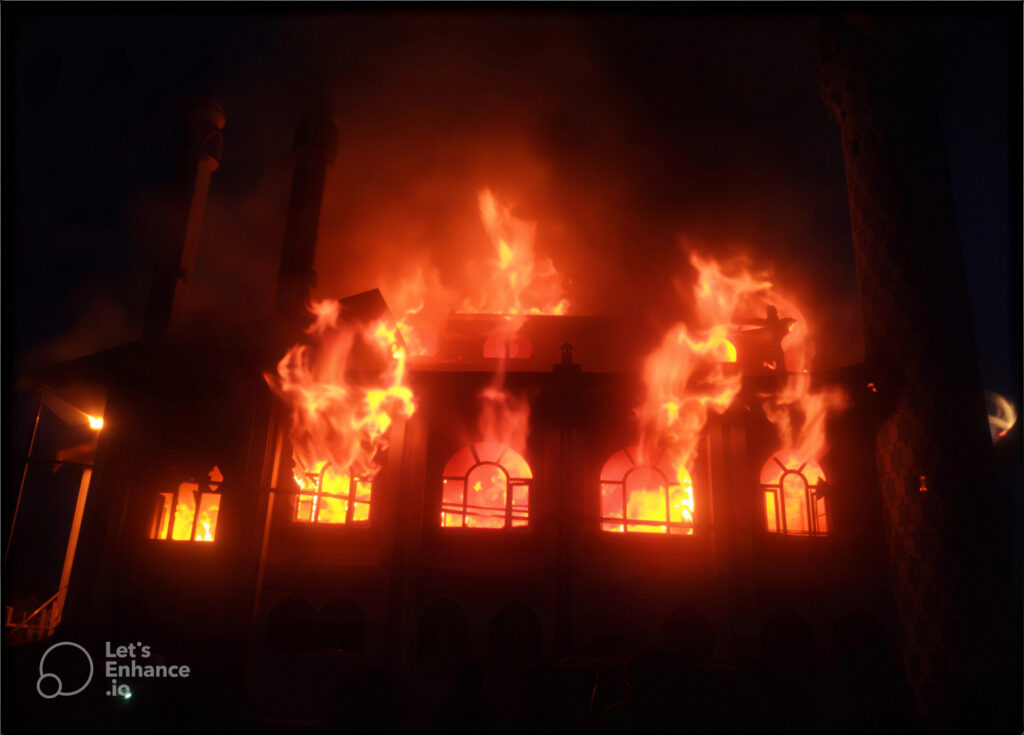
These incidents are not merely tragedies but important lessons, highlighting that warning signs were present but unfortunately ignored.
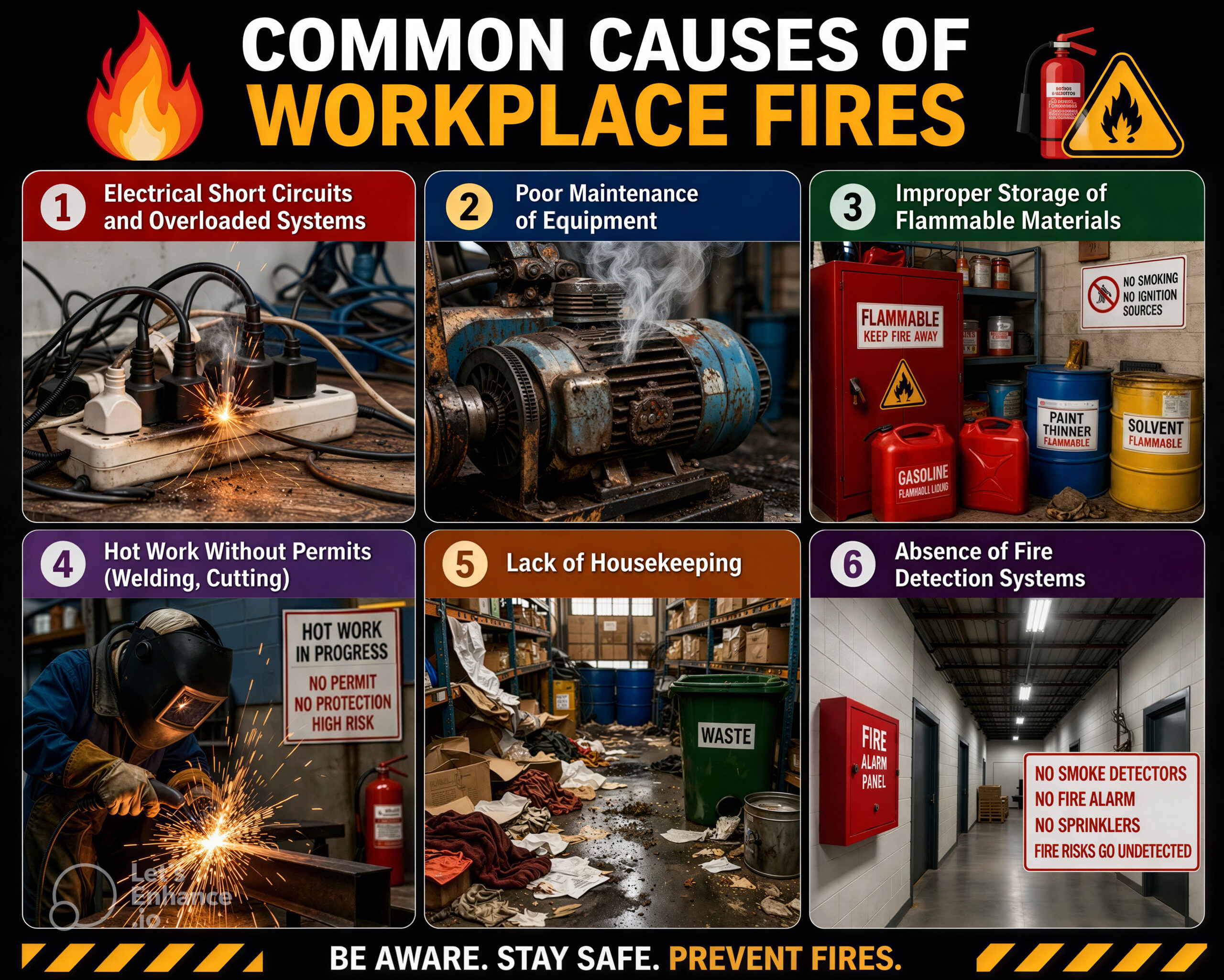
In many situations, the primary cause is not technical failure but human negligence and lack of awareness.
How Fire Incidents Can Be Prevented
Preventing fire incidents requires a proactive approach that combines multiple safety measures.
🔧 Engineering Controls
- Proper electrical system design and maintenance
- Installation of fire alarms and suppression systems
📋 Administrative Controls
- Fire risk assessments
- Standard operating procedure
- Permit-to-work systems
👨🏫 Behavioural Controls
- Employee awareness programs
- Regular safety communication
However, even with these measures in place, the effectiveness of safety systems ultimately depends on well-trained personnel.
Why Fire Safety Training is Essential
During a fire emergency, the initial minutes are crucial in determining the outcome. Employees must be equipped with the knowledge to know;
- How to identify fire types
- How to use fire extinguishers (PASS technique)
- How to evacuate safely
- How to respond without panic
A key reality is that people do not rely on written instructions in emergencies; instead, they act based on their training. Therefore, proper training is essential to ensure a timely and effective response.
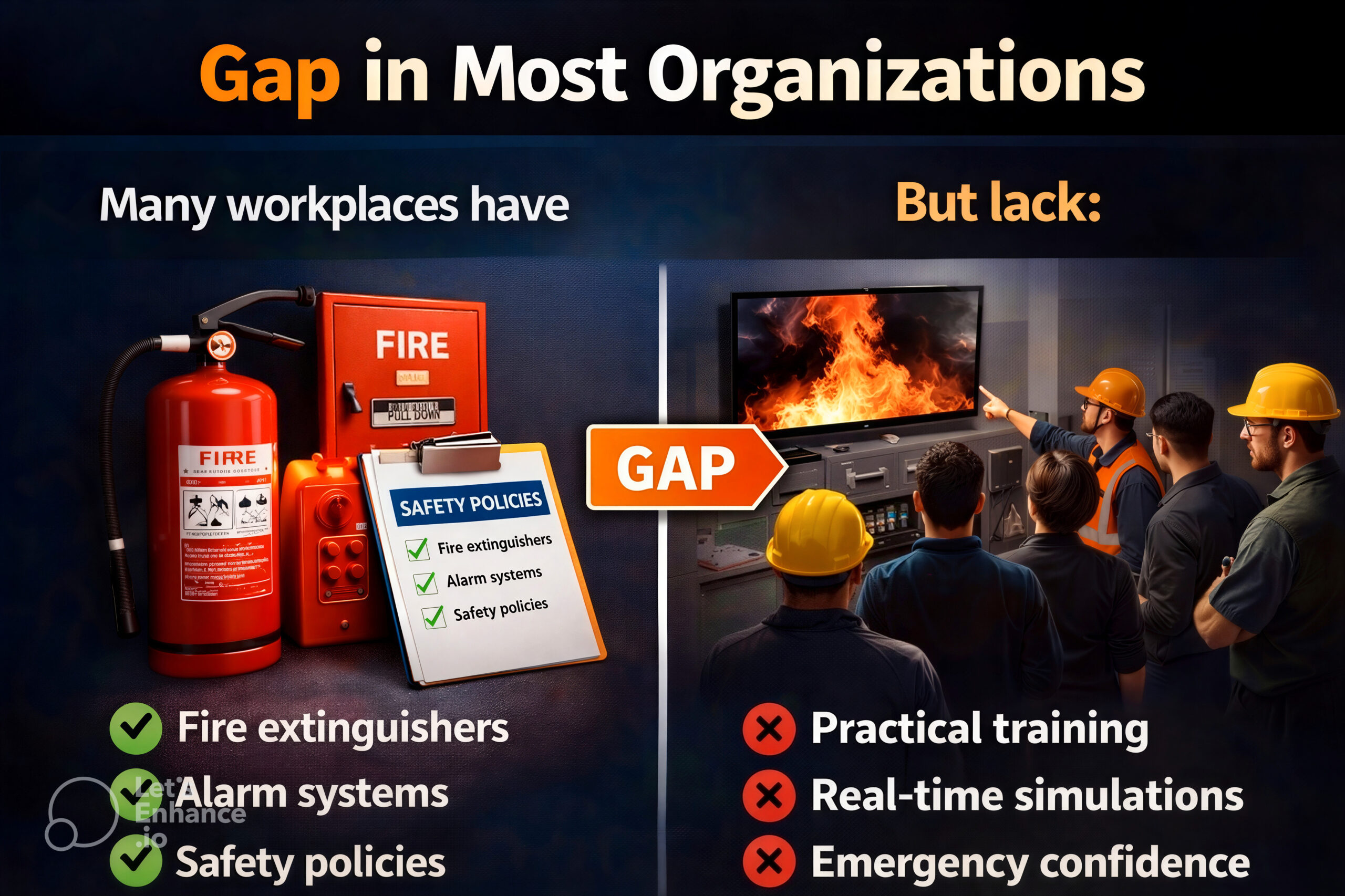
This gap between available systems and actual preparedness leaves a critical gap in which risks remain and safety precautions could fail when they are needed the most.
Why Fire Safety Training with Evolve Safety Consultive Matters
Evolve Safety Consultive focuses on making fire safety practical and result-oriented. Evolve Safety Consultive provides specialized health, safety, and environmental (HSE) consulting, auditing, and training services to improve workplace safety and compliance.
What we offer
- Customized fire safety training based on your workplace
- Hands-on extinguisher training
- Real-time mock drills
- Emergency response team (ERT) development
This ensures that employees are not only informed but also capable of taking immediate and effective action during emergencies.
Conclusion
Even though fire accidents are often unpredictable, their impacts can be significantly minimized through proper preparedness. Effective planning, regular training and well-maintained safety systems guarantee a faster and more coordinated response during emergencies. The difference between a minor incident and a major disaster ultimately depends on how well individuals and systems are prepared to respond. A proactive approach to fire safety not only protects lives and property but also strengthens organizational resilience and long-term sustainability.
Take the Next Step Toward Safety
Do not wait for a Fire incident to realize the importance of training.
Partner with Evolve Safety Consultive to:
✔ Strengthen your fire safety systems
✔ Train your workforce
✔ Build a safer workplace