
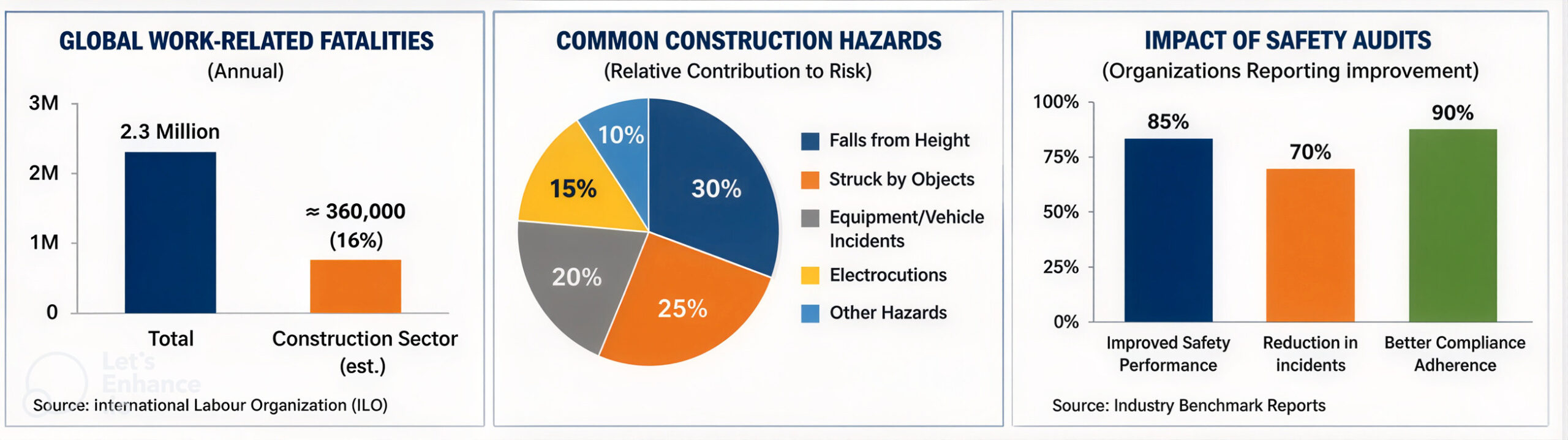
Every construction site is an epitome of two parallel realities: one is visible progress, and the other is underlying risk. While structures advance and operations intensify, hazards such as inadequate protection, compromised safety measures, and insufficiently trained personnel can develop simultaneously. These are not isolated lapses but indicators of systemic vulnerabilities that can lead to serious incidents. According to the International Labour Organisation, over 2.3 million fatalities occur annually due to work-related accidents and diseases, with the construction sector contributing significantly to this figure. This highlights the inherently high-risk nature of construction environments and the need for structured risk control mechanisms.
Construction Safety Audits have therefore evolved from a compliance requirement into a critical risk management function. They provide a systematic approach to identifying hazards, evaluating control measures, and assessing adherence to safety standards and regulatory obligations. By enabling early detection of unsafe conditions and behavioural gaps, audits support preventive action, enhance operational safety performance, and protect organisational interests, including workforce well-being, project continuity, and reputation.
What is a Construction Safety Audit?
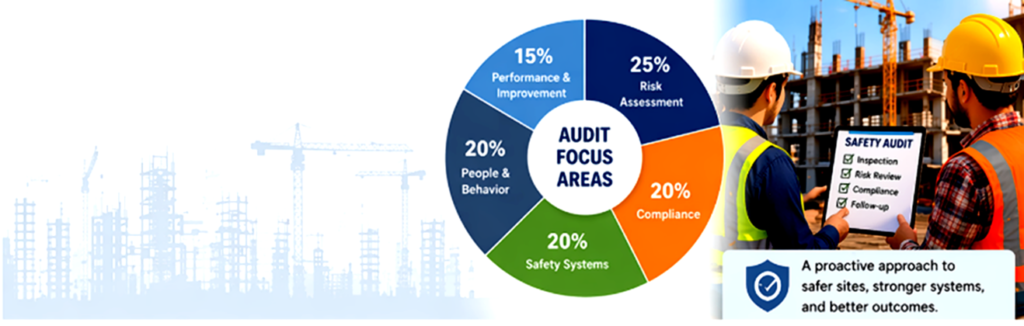
A Construction Safety Audit is a structured evaluation process which is used for assessing safety performance, identifying risks, and ensuring compliance on construction sites. It also helps organisations proactively manage hazards and strengthen overall safety systems.
Key Elements Covered in a Construction Safety Audit,
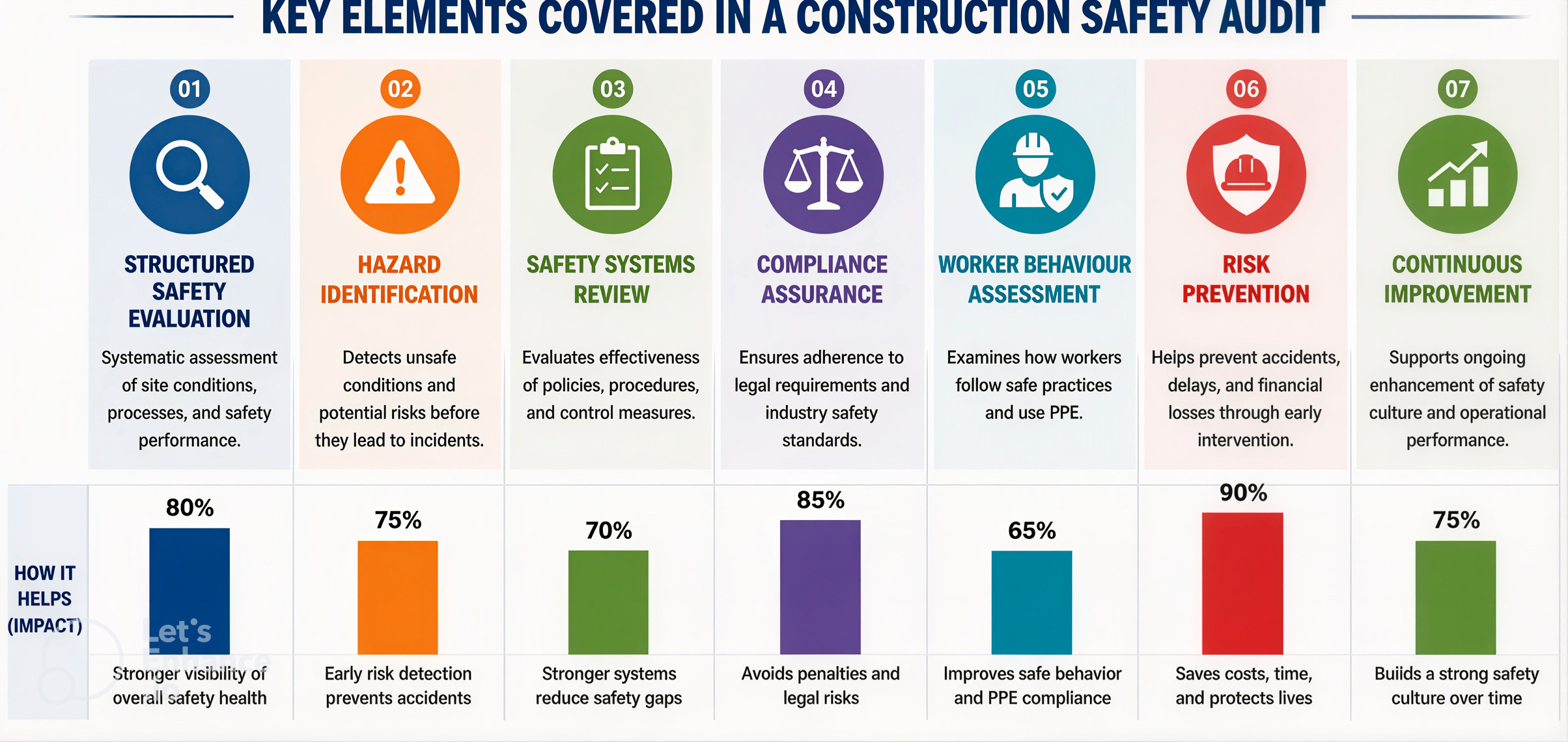
Structured Safety Evaluation: Systematic assessment of site conditions, processes, and safety performance.
Hazard Identification: Detects unsafe conditions and potential risks before they lead to incidents.
Safety Systems Review: Evaluates the effectiveness of policies, procedures, and control measures.
Compliance Assurance: Ensures adherence to legal requirements and industry safety standards.
Worker Behaviour Assessment: Examines how workers follow safe practices and use PPE (Personal Protective Equipment).
Risk Prevention: Helps prevent accidents, delays, and financial losses through early intervention.
Continuous Improvement: Supports ongoing enhancement of safety culture and operational performance.
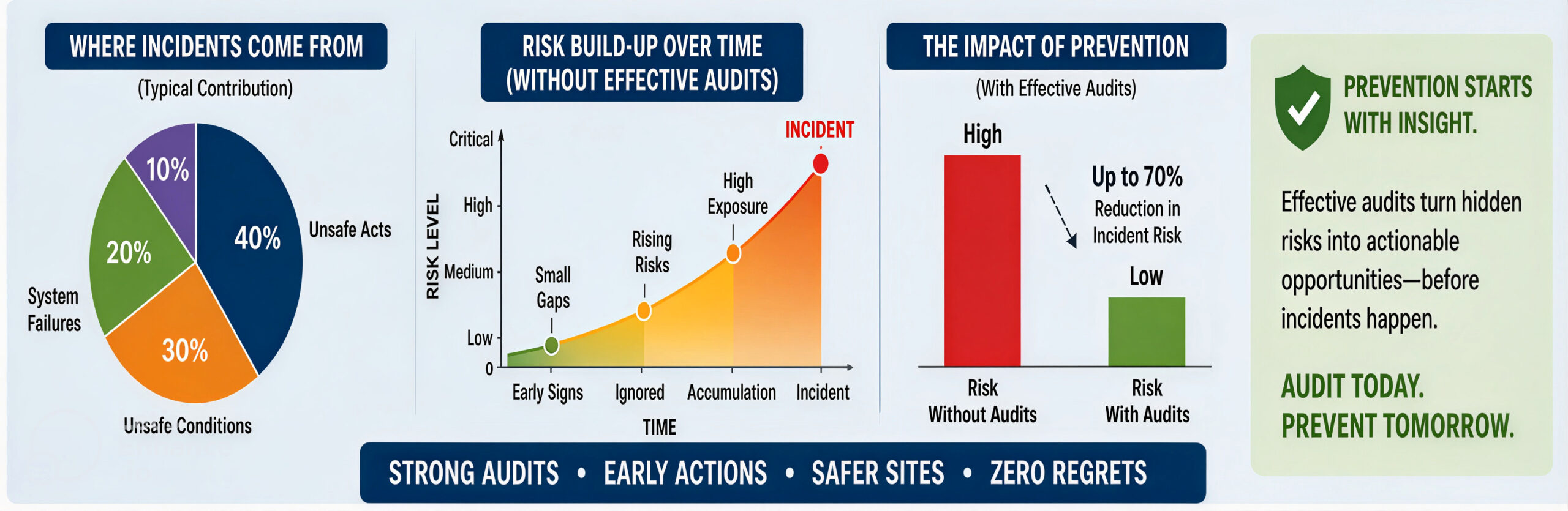
Construction Accidents Are Not Random Events — They Are Predictable and Preventable
Non-Random Nature of Construction Incidents: Construction accidents are not spontaneous events; they are the outcome of latent system failures and unaddressed risk exposures.
Underlying Safety Gaps: Deficiencies such as missed inspections, deviation from established procedures, and unreported unsafe acts contribute to risk accumulation.
Escalation of Minor Deficiencies: Seemingly minor issues—such as unstable scaffolding, improper electrical handling, and inadequate supervision—can escalate into high-severity incidents.
Audit Deficiencies as Root Causes: Many incidents reflect inadequacies in the safety audit process, including failure to identify hazards, assess risks, and implement timely corrective actions.
Interaction of Unsafe Acts and Conditions: Construction accidents typically result from the convergence of unsafe behaviours (e.g., non-use of Personal Protective Equipment (PPE), procedural violations) and unsafe site conditions (e.g., poor housekeeping, defective equipment).
Progressive Risk Build-Up: In the absence of effective audits, risks accumulate progressively, ultimately manifesting as incidents that could have been prevented through systematic intervention.
Why Safety Audits Matter More Than Ever
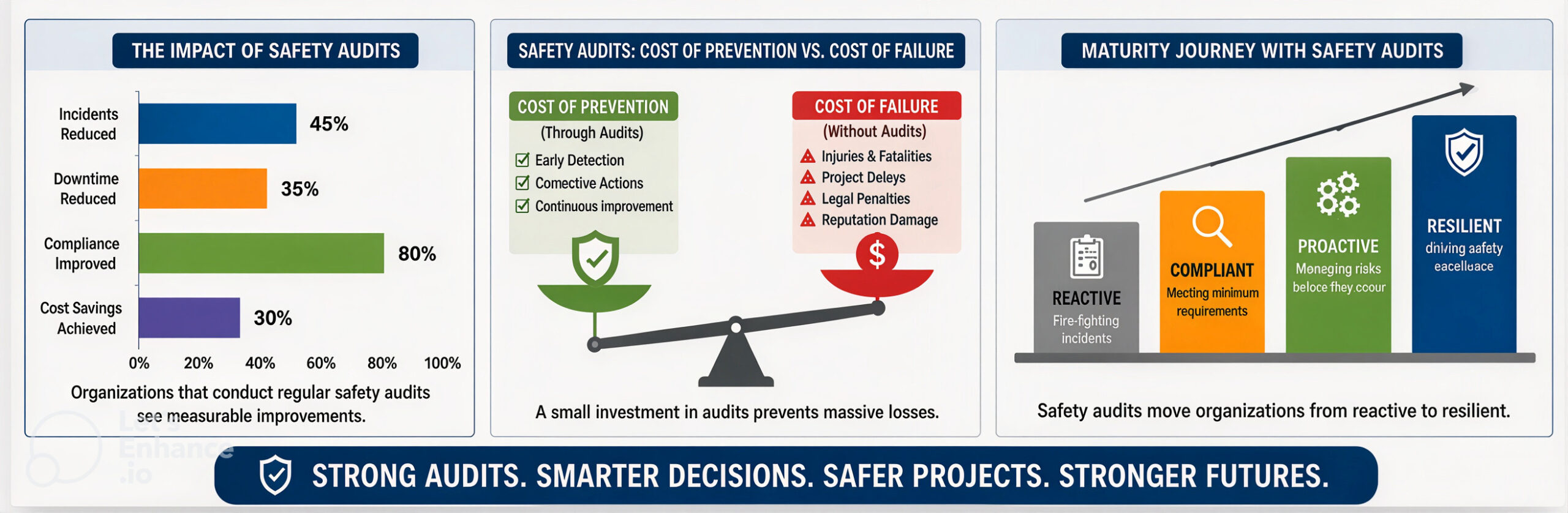
A robust audit framework functions as a proactive risk control mechanism, enabling early identification and mitigation of hazards.
Driving Safety Culture Transformation: A well-executed safety audit will go beyond risk identification & strengthens organizational safety culture and accountability across all levels.
Proactive Hazard Identification: Detects hidden hazards and potential risk exposures before they escalate into incidents or operational disruptions.
Regulatory Compliance Assurance: Ensures adherence to applicable legal frameworks, including the Building and Other Construction Workers (Regulation of Employment and Conditions of Service) Act, 1996, and other statutory requirements.
Reduction in Incidents and Downtime: Minimises workplace injuries, near misses, and project delays through systematic risk control and monitoring.
Enhancing Workforce Confidence: Promotes trust and engagement by demonstrating commitment to worker safety and well-being.
Protection of Reputation and Project Continuity: Safeguards organisational credibility, client trust, and timely project delivery by preventing safety-related disruptions.
Mitigation of Legal and Financial Risks: Non-compliance can lead to severe consequences such as heavy penalties, project shutdowns, and legal liabilities—audits help prevent these outcomes.
Preparedness and Proactive Risk Management: Establishes a structured approach to safety, ensuring organisations are not just compliant but operationally prepared and forward-looking.
Why Your Business Needs It Today
In today’s compliance-driven construction environment, safety has become a critical business priority rather than just an operational requirement. Organisations must proactively manage risks to meet stakeholder expectations and avoid costly consequences.
- Rising Client Expectations: Clients increasingly demand safer, well-controlled, and risk-managed project execution
- Stricter Regulatory Environment: Safety regulations are becoming more stringent, with higher accountability and enforcement
- Workforce Safety Expectations: Workers expect secure, well-supervised, and hazard-free working conditions
- Impact of a Single Incident: One incident can result in loss of lives, severe reputational damage, and significant financial losses
- Value of Proactive Audits: A well-timed safety audit helps identify risks early and prevent incidents before they occur
The Evolve’s Approach to Construction Safety Audits
At Evolve Safety, we don’t just conduct audits — we transform safety performance.
Our audits are:
- Comprehensive – Covering site conditions, documentation, and behaviour
- Practical – Focused on real-world risks, not just paperwork
- Insight-Driven – Providing actionable recommendations
- Client-Centric – Tailored to your project needs
We believe a safety audit should not be a fault-finding exercise —
-It should be a value-adding process that prevents incidents before they occur.
Partner with us today for a construction safety audit to make your construction site safer, smarter, and future-ready.